Article

“It’s good.”
That is often how a tasting begins.
A few workshops later, the same participants are talking about silky texture, notes of fresh butter, washed rinds, length on the palate, and aromatic balance.
Not because they have become specialists, but because they have learned how to put their sensations into words.
Contrary to popular belief, the vocabulary of cheese is not reserved for professionals. It simply helps us describe more precisely what we see, smell, and taste.
For more than a century, Androuet Master Cheesemongers have used this language to select exceptional cheeses, follow their development during affinage, and guide customers with greater accuracy.
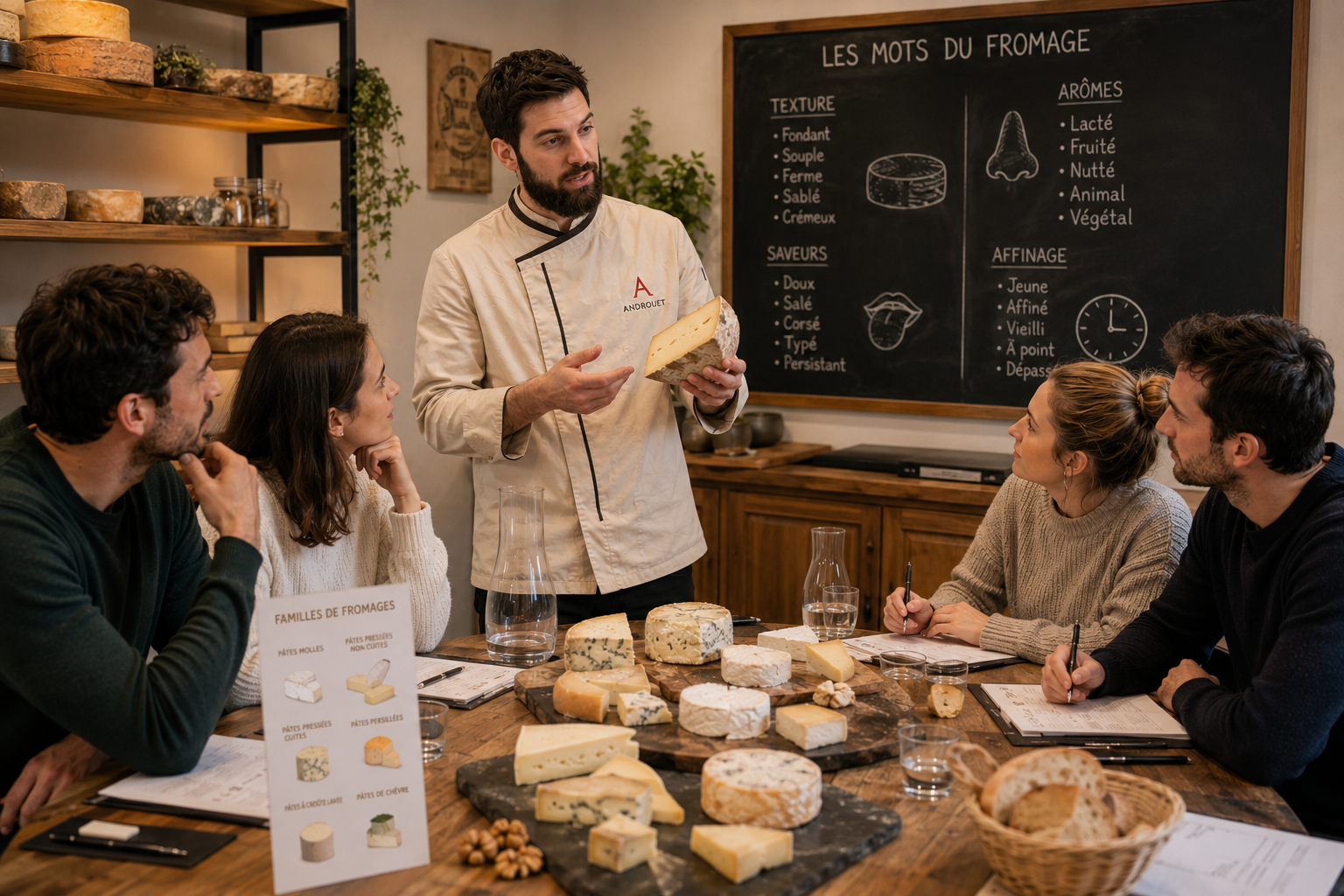
During our workshops, we introduce this vocabulary gradually and without unnecessary jargon.
Here are the main terms you are likely to encounter.
Even before tasting begins, a cheese already reveals a great deal.
The rind is the cheese’s natural outer layer.
It protects the interior paste during aging and often plays an important role in the development of aroma and flavor.
The main types include:
Bloomy rind: covered with a soft white surface mold, as found on Brie de Meaux or Camembert.
Washed rind: regularly washed during aging, often orange or reddish in color, as with Munster or Époisses.
Natural rind: formed naturally during maturation.
Ash-coated rind: covered with a fine layer of vegetable ash.
Dry rind: typical of many longer-aged cheeses.
“A beautiful rind is never simply packaging. It is an integral part of the cheese.”
— Nicolas, Androuet Master Cheesemonger
The paste is the inside of the cheese.
It may be:
Its color can also provide clues about the milk, the season, and the stage of maturity.
The famous “holes” found in certain cheeses are more accurately described as openings or eyes.
Their size, shape, and distribution are often characteristic of a particular cheese family or production method.
Cheese tasting always begins with the nose.
Aromas are generally grouped into broad families.
These may evoke:
They are often especially noticeable in younger cheeses.
Depending on the cheese, these may suggest:
Long-aged Comté can offer particularly fine examples.
Some cheeses reveal aromas of:
These aromas often express the connection between the cheese and its terroir.
These are particularly characteristic of some washed-rind cheeses.
They may recall:
Contrary to common assumptions, these aromas are not necessarily signs of a defect.
Texture is one of the most important dimensions of cheese tasting.
A cheese may be described as:
It spreads easily and melts quickly.
The paste is very fluid, often because the cheese has reached full maturity.
It gradually dissolves on the palate.
It breaks easily into small pieces.
The paste resists before breaking cleanly.
The texture is exceptionally fine, smooth, and even.
The cheese springs back slightly when pressed.
A more pronounced grain can be felt on the palate.
Several main sensations can be identified in the mouth.
Often found in soft cheeses and certain fresh goat’s cheeses.
Naturally more pronounced in some blue cheeses and longer-aged varieties.
Especially noticeable in fresh cheeses.
Pleasant when it contributes to balance, but excessive when it overwhelms the other flavors.
This fifth taste is frequently found in long-aged cheeses.
It creates an impression of depth, richness, and savory intensity.
Affinage gradually transforms a cheese.
Several terms are used regularly.
The cheese is still at an early stage of maturation.
Its aromas are generally delicate and restrained.
The cheese is expressing its full potential.
Texture, aroma, and overall balance come together.
This is usually the stage sought by Master Cheesemongers.
“The best cheese is not necessarily the oldest. It is the one tasted at exactly the right moment.”
— Claire, Androuet Master Cheesemonger
The cheese has passed its ideal point of balance.
Some of its finest qualities may begin to fade.
Several expressions are commonly used during our workshops.
The very first sensations perceived on the palate.
The stage at which the cheese begins to reveal its full personality.
The aromas and flavors that remain after swallowing.
The amount of time the flavors remain perceptible.
Exceptional cheeses often have remarkable length.
No single aroma, flavor, or sensation dominates excessively.
Everything feels harmonious.
The cheese evolves on the palate and reveals several aromatic families in succession.
Our workshops also introduce the language used by professionals.
A specialist who guides a cheese through its maturation.
A controlled environment where temperature and humidity allow cheese to develop correctly.
Regularly changing the position of a cheese to ensure even aging.
Cleaning or maintaining certain rinds during affinage.
Moistening the rind with brine or another suitable solution to encourage the development of specific surface flora.
Many consumers use broad expressions such as:
These descriptions are not wrong, but they remain very general.
Try to be more precise.
For example:
Your description will immediately become clearer and more useful.
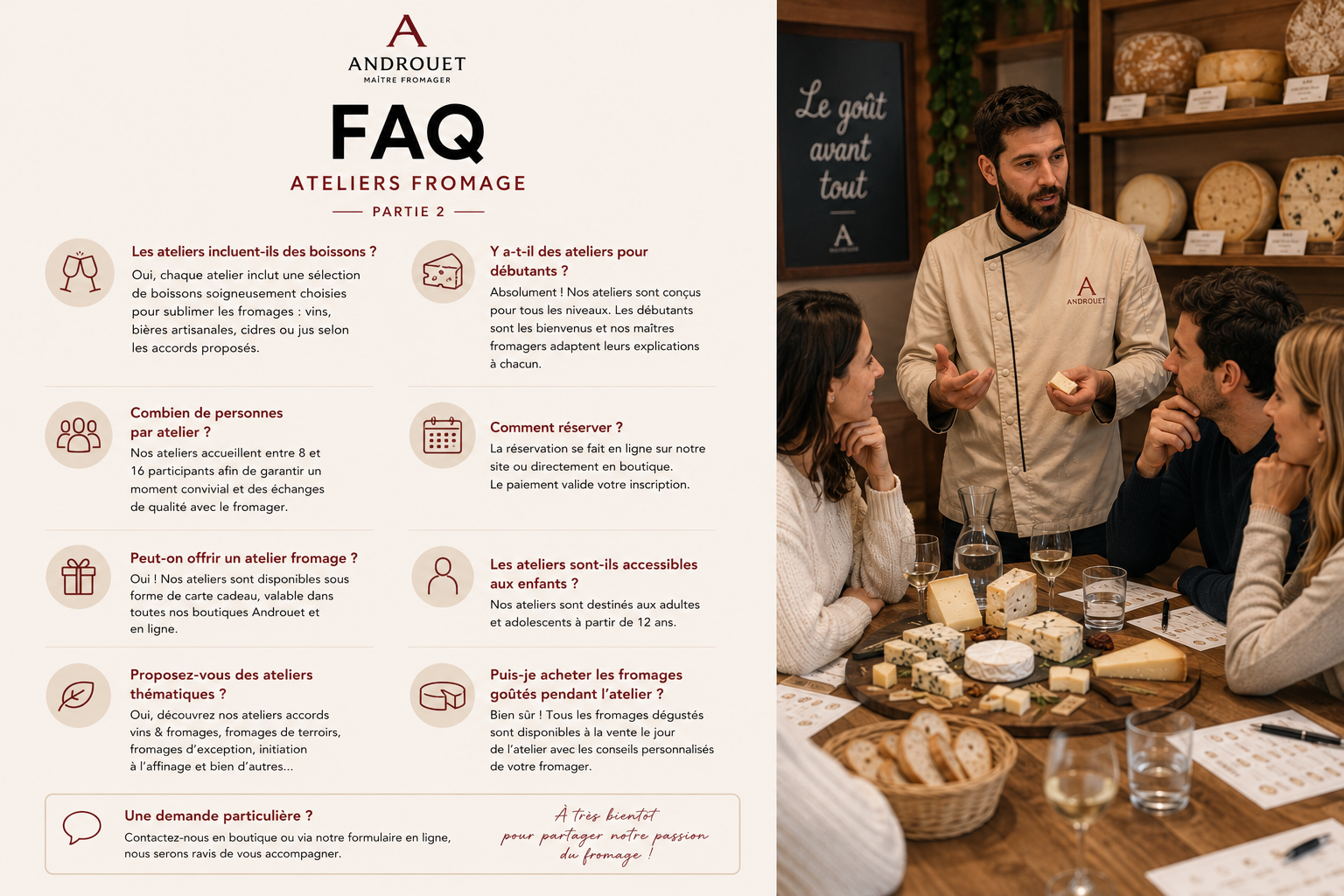
At the beginning of a workshop, we sometimes ask participants to describe a cheese in a single word.
The answer is often:
“Good.”
By the end of the session, the same participants may naturally say:
“A very silky texture, beautiful notes of fresh butter, a subtle hint of hazelnut, and a long finish with a touch of woodland.”
This change does not come from memorizing a list of terms.
It comes from learning to pay closer attention to one’s own sensations.
Learning the vocabulary of cheese does not turn tasting into an academic exercise.
Quite the opposite.
The more words you have to describe a cheese, the better you become at identifying what you genuinely enjoy.
You will choose more confidently, understand your cheesemonger’s recommendations more easily, and take greater pleasure in sharing your discoveries.
That is the purpose of Androuet workshops:
To pass on a common language that helps everyone better understand one of the finest treasures of French gastronomy.
Because learning the language of cheese is, above all, learning how to taste it more fully.
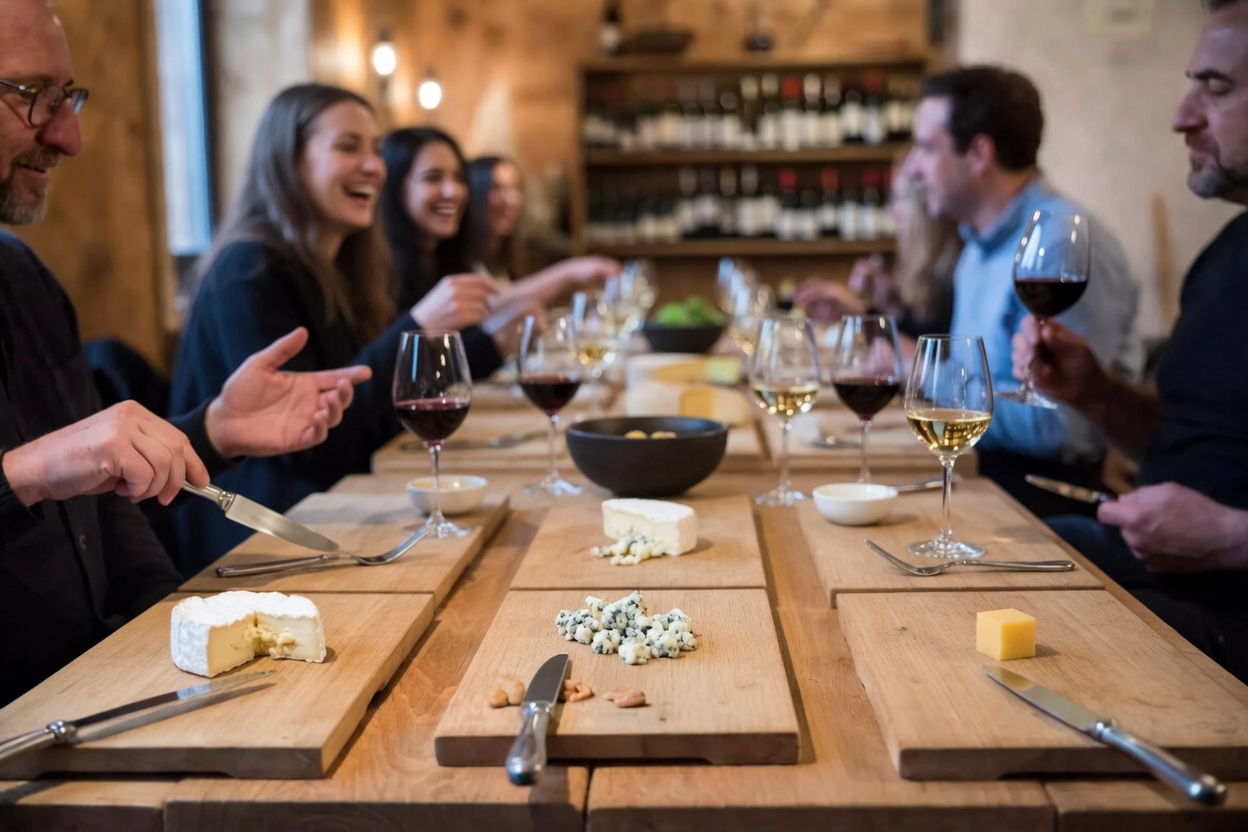
“Cheese discovery” workshop in Paris
Come and learn the subtle art of cheese and its pairings with our cheesemonger and affineur—an expert in the science of cheese.
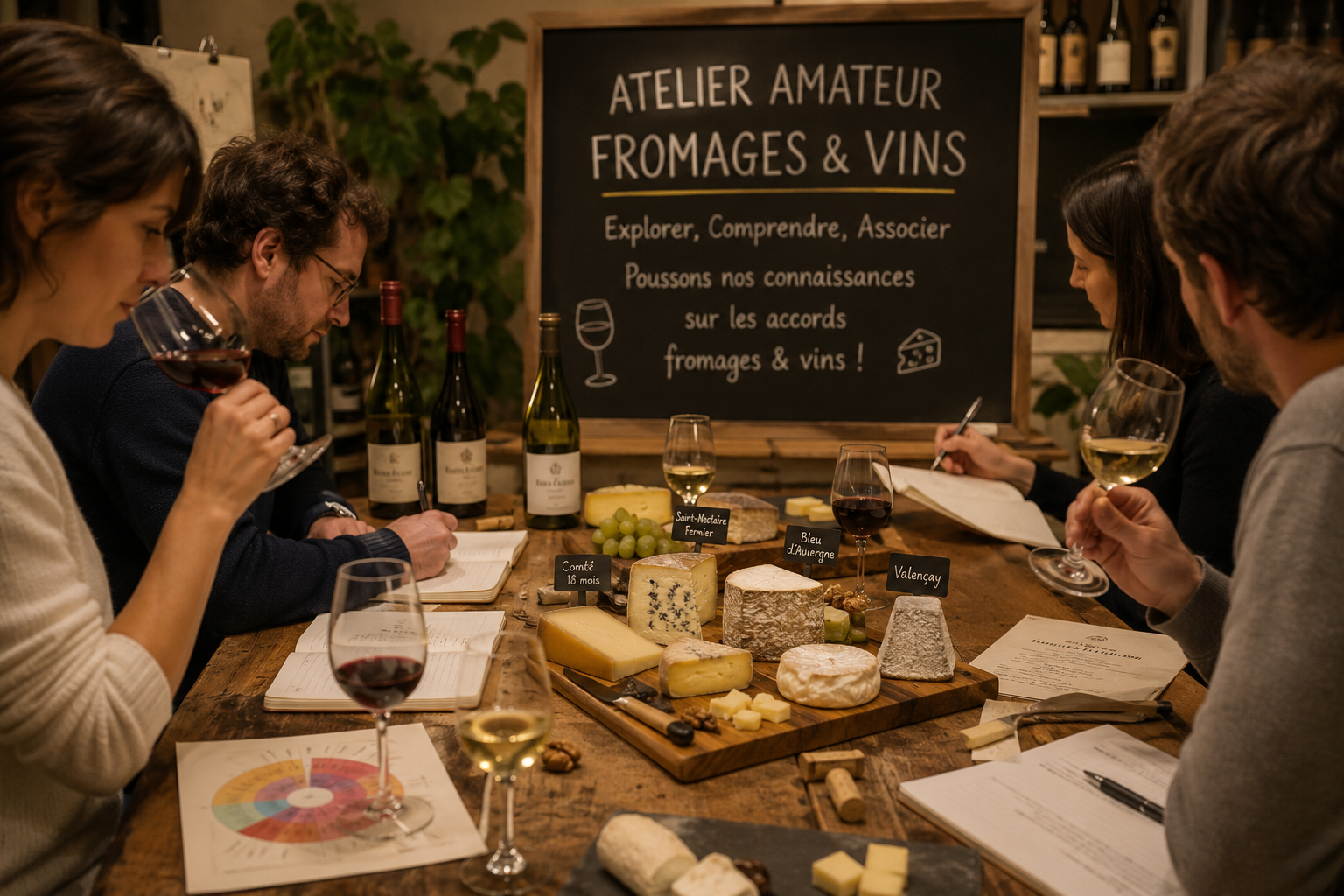
“Cheese enthusiast” workshop in Paris
Deepen your knowledge with this workshop on cheese and wine pairings.
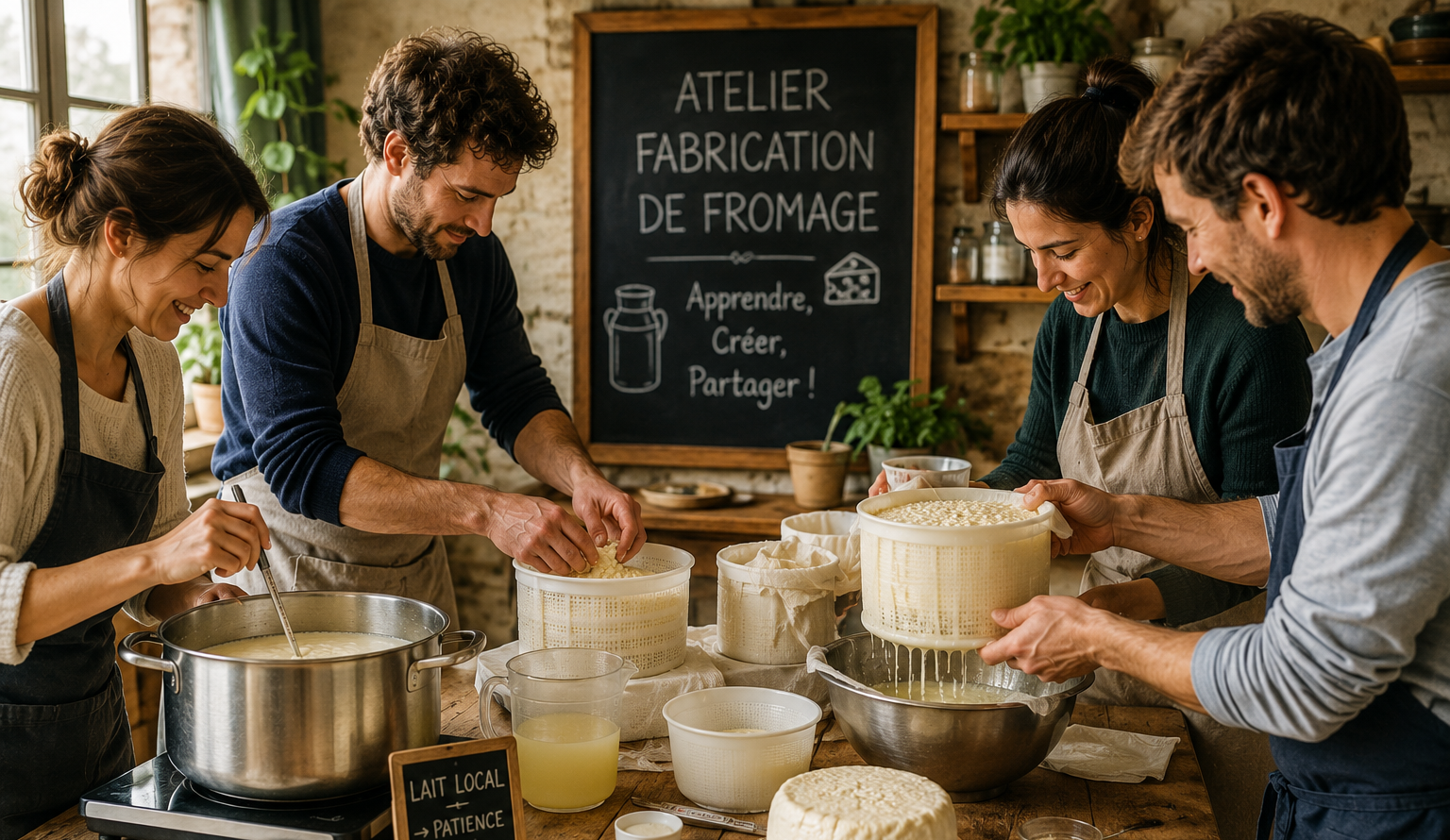
Cheese-making workshop in Paris
Learn how to make 3 cheeses.

The “Secrets of Cheese” workshop in Paris
Learn, taste, and have fun. Come and discover this introduction to the art of cheese tasting. Learn to put your sensory impressions into words—all in a fun and cheerful atmosphere!
An Androuet exclusive.
Explore our guide to know everything about cheese from A to Z.