Article

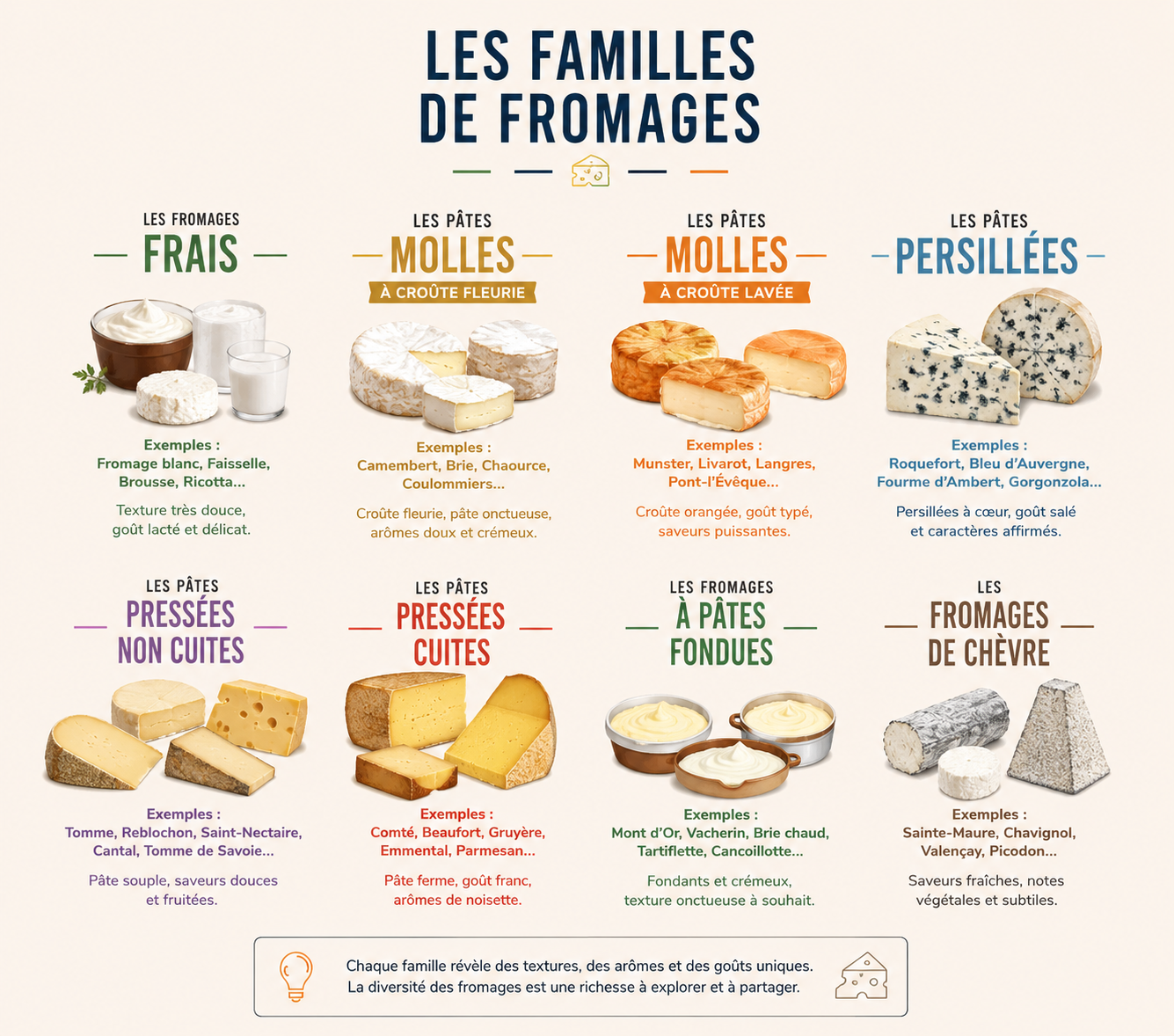
France produces well over a thousand different cheeses.
Between PDO cheeses, regional specialties, farmhouse creations, and family recipes, it is easy to feel overwhelmed.
Yet Master Cheesemongers do not begin by memorizing hundreds of cheese names.
They first learn to understand the major cheese families.
Why?
Because cheese families reveal how a cheese is made, matured, and enjoyed. They help predict its texture, aromas, evolution, and even the beverages that pair with it best.
At Androuet, this approach forms one of the foundations of our workshops. Once you understand the major families, every new cheese becomes much easier to discover.
“We don’t memorize a thousand cheeses. We first understand a handful of major families, and every cheese naturally finds its place.”
— Nicolas, Androuet Master Cheesemonger
Two cheeses produced hundreds of miles apart can share remarkably similar characteristics.
Conversely, two cheeses from the same region may belong to completely different families.
What defines a cheese family is not geography but primarily:
This classification provides the key to understanding a cheese’s personality.
Fresh cheeses represent one of the earliest stages of transforming milk into cheese.
They undergo little or no aging.
Their texture remains soft, sometimes slightly grainy, with exceptional freshness.
They typically display:
Well-known examples include:
These cheeses are especially popular during spring and summer.
They are equally at home in savory dishes and desserts.
Perhaps the best-known cheese family.
During aging, a delicate white bloom develops naturally across the surface.
This living rind plays a direct role in transforming the interior paste.
As the cheese matures, the paste gradually softens from the outside toward the center.
Typical aromas include:
Classic representatives include:
In Androuet workshops, this family beautifully illustrates the dramatic influence of aging.
The same Brie tasted at different stages of maturity can offer three completely different experiences.
This family often surprises first-time participants.
Their orange or reddish rinds are washed regularly during aging, creating wonderfully expressive aromas.
Yet their flavor is usually much gentler than their aroma suggests.
Common tasting notes include:
Famous examples include:
“Many participants arrive convinced they won’t enjoy washed-rind cheeses. After a guided tasting, they often become their favorite discovery.”
— Claire, Androuet Master Cheesemonger
After molding, these cheeses are pressed to remove part of the whey.
Unlike cooked pressed cheeses, the curd is not heated to high temperatures, allowing them to retain a softer texture.
This family includes an exceptionally broad range of flavors.
Among the best known are:
These cheeses often express their full personality when tasted at perfect maturity.
This family includes some of the world’s greatest long-aged cheeses.
After the curd is cut, it is heated before being firmly pressed.
This technique allows for lengthy maturation and encourages remarkable aromatic complexity over time.
Common tasting notes include:
Classic representatives include:
Our workshops often compare several stages of maturity of the same cheese, allowing participants to experience the extraordinary influence of time.
The famous blue cheeses belong to this family.
Their distinctive blue-green veins develop through carefully controlled mold growth during aging.
Contrary to popular belief, not all blue cheeses are intensely powerful.
Some are remarkably delicate.
Well-known examples include:
Typical tasting notes include:
This family creates some of the world’s finest pairings with sweet dessert wines.
Goat’s cheeses are so diverse that they almost form a category of their own.
They may be:
Goat’s milk naturally develops distinctive aromas, while aging profoundly transforms both texture and flavor.
Classic examples include:
During our workshops, we often compare several stages of maturity of the same goat’s cheese.
This exercise is consistently one of the highlights of the tasting.
Although fewer in number than cow’s milk cheeses, sheep’s milk cheeses occupy a central place in French cheesemaking.
Sheep’s milk is naturally rich in both butterfat and protein.
It produces cheeses that are generous, elegant, and beautifully textured.
Notable examples include:
Their texture is often exceptionally smooth and melting.
Less common in France but fundamental to Italian gastronomy, these cheeses are made by stretching the curd while it is still warm.
This process creates their characteristic supple and elastic texture.
Examples include:
Their unique texture makes them immediately recognizable.
Not every cheese fits perfectly into a single category.
Some possess highly distinctive production methods.
Examples include:
These cheeses remind us that cheesemaking remains a living tradition, constantly evolving while respecting its heritage.
During our workshops, we teach a simple method.
Ask yourself four questions:
1. What kind of rind does it have?
Bloomy? Washed? Natural? Dry? Ash-coated?
2. What is its texture?
Creamy? Firm? Brittle? Melting?
3. What type of milk was used?
Cow? Goat? Sheep? Buffalo?
4. How do the aromas develop?
Milky? Fruity? Spicy? Animal? Woody?
Within just a few seconds, these observations will help identify most of the major cheese families.
During some tastings, we deliberately present several cheeses without revealing their names.
Participants are asked to identify only the family to which each cheese belongs.
By the end of the exercise, they are often amazed by how successful they have been.
Why?
Because they are no longer trying to memorize hundreds of cheese names.
They are simply applying a method of observation.
That is exactly how Master Cheesemongers work.
Learning the major cheese families is probably the fastest way to improve your tasting skills.
Once these essential reference points are established, every new cheese becomes easier to understand.
You are no longer tasting a cheese simply to decide whether you like it.
You begin to understand why it has that texture, those aromas, that rind, and that particular personality.
For more than 115 years, Androuet Master Cheesemongers have passed on this way of reading cheese through their advice, their aging cellars, and their workshops.
Because behind every cheese family lies a story, a terroir, and generations of women and men preserving one of the world’s finest gastronomic traditions.
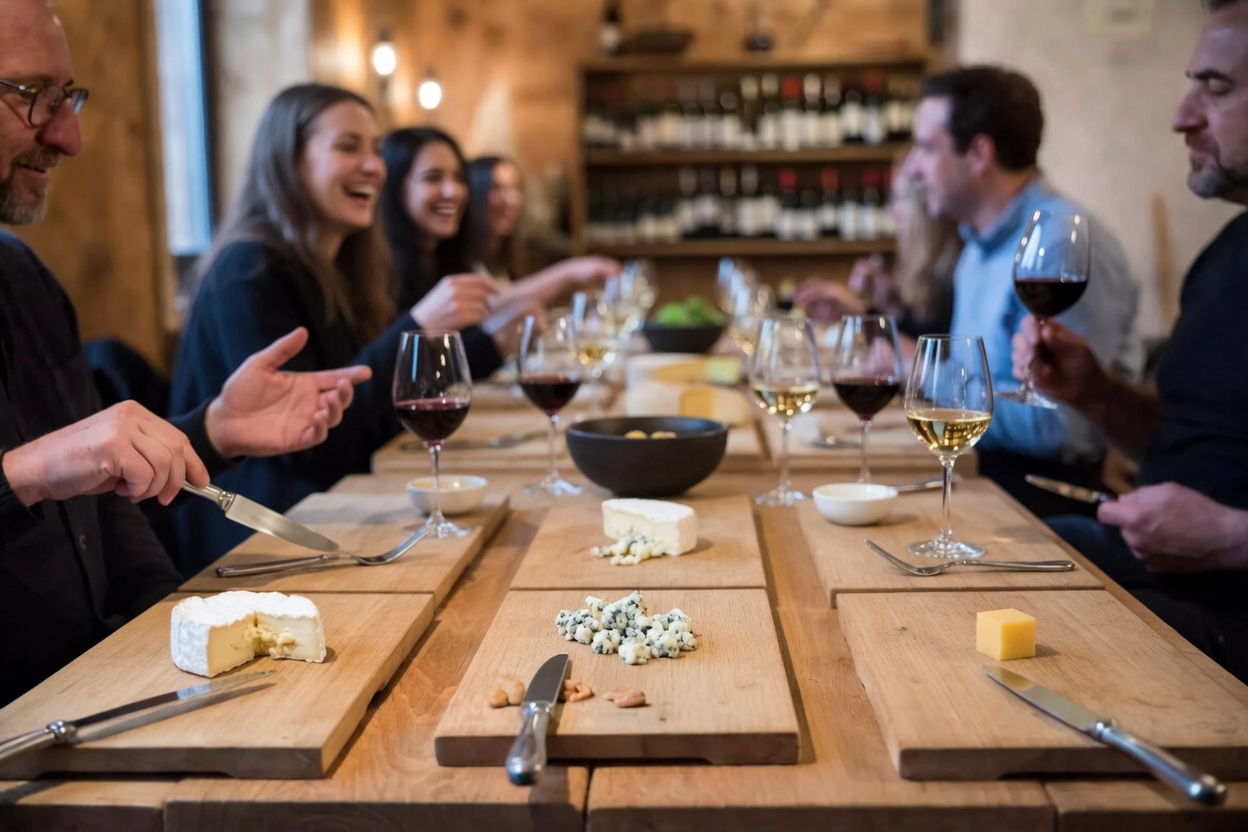
“Cheese discovery” workshop in Paris
Come and learn the subtle art of cheese and its pairings with our cheesemonger and affineur—an expert in the science of cheese.
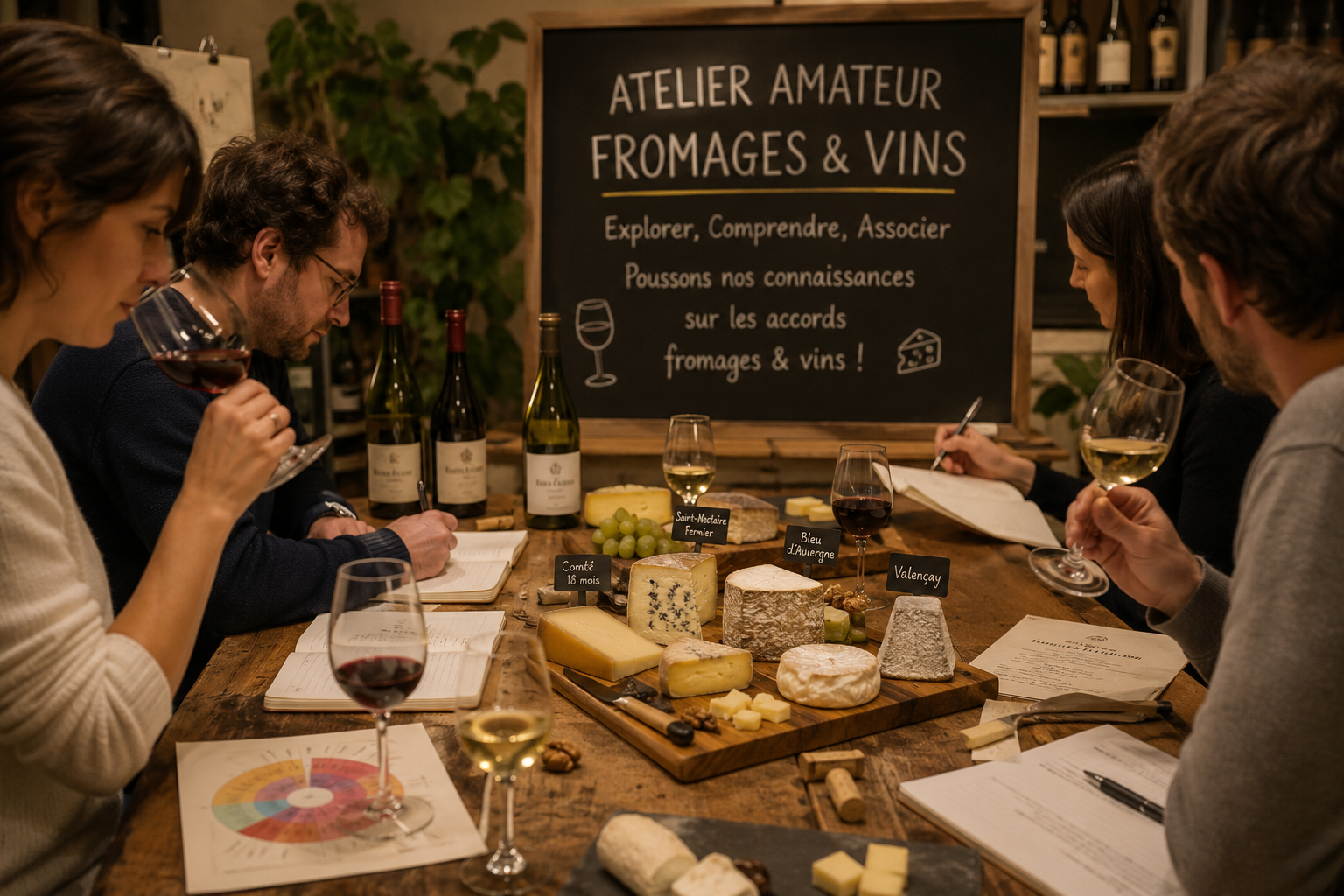
“Cheese enthusiast” workshop in Paris
Deepen your knowledge with this workshop on cheese and wine pairings.
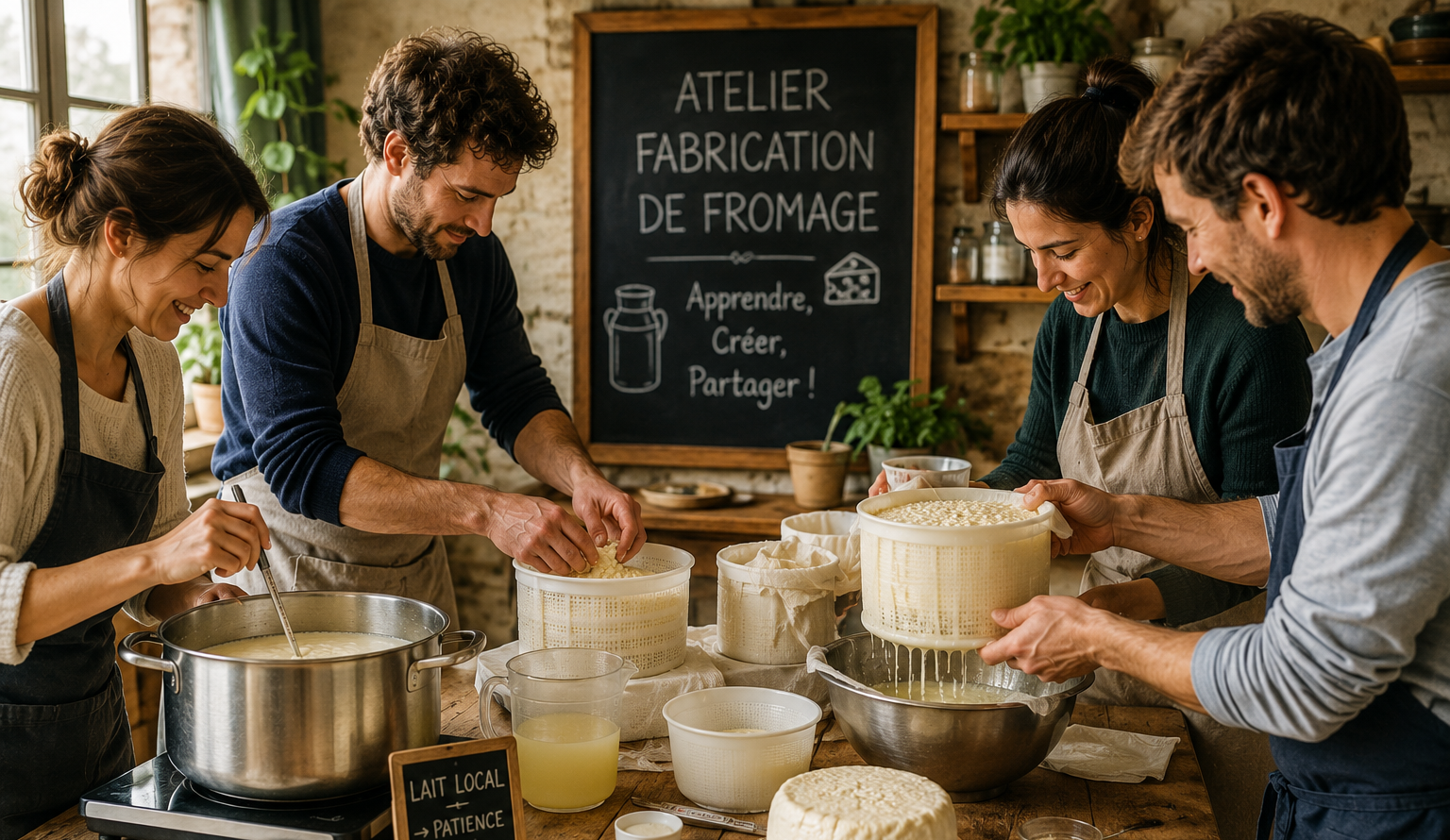
Cheese-making workshop in Paris
Learn how to make 3 cheeses.
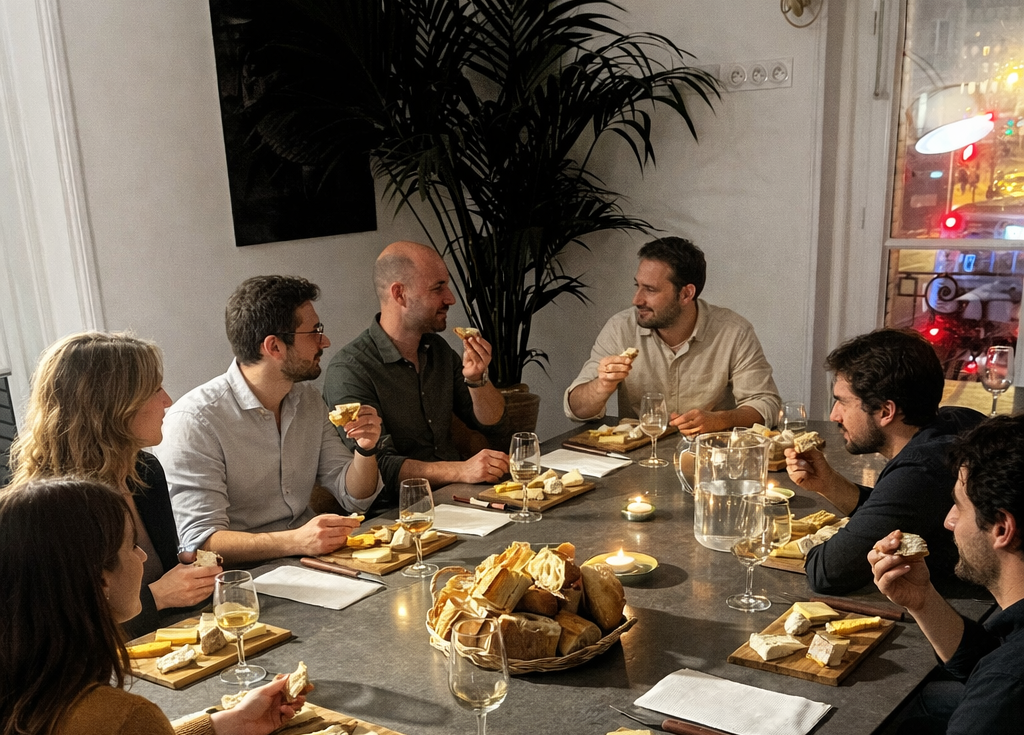
The “Secrets of Cheese” workshop in Paris
Learn, taste, and have fun. Come and discover this introduction to the art of cheese tasting. Learn to put your sensory impressions into words—all in a fun and cheerful atmosphere!
An Androuet exclusive.
Explore our guide to know everything about cheese from A to Z.