Article

The answer is: it depends.
Many rinds are perfectly edible and form an essential part of the cheese’s identity. This is true of numerous bloomy rinds, such as Brie de Meaux and Camembert, as well as washed rinds and certain natural rinds.
By contrast, some very thick, treated, or purely protective rinds are not generally intended to be eaten.
During Androuet workshops, our Master Cheesemongers explain the differences between the main types of rind and identify those that genuinely belong to the tasting experience.
This is one of the discoveries that surprises participants most.
The aroma often comes primarily from the flora developing on the rind during affinage. This flora may produce powerful scents even when the interior paste remains gentle and balanced.
This is especially common with washed-rind cheeses.
Conversely, some cheeses that seem discreet on the nose reveal remarkable intensity and complexity on the palate.
One of the first lessons of a cheese workshop is therefore never to judge a cheese by its smell alone.
A cheese does not reveal all its aromas immediately.
As it warms in the mouth, its fats gradually melt and release different aromatic compounds.
This is why Master Cheesemongers taste slowly.
They generally distinguish between:
This gradual evolution is one of the great pleasures of cheese.
Because the palate becomes progressively less sensitive.
If you begin with Roquefort or a highly matured Époisses, the subtler flavors of the cheeses that follow will be much more difficult to perceive.
During Androuet workshops, we generally follow a progression from:
This order preserves the balance of the tasting and allows every cheese to express itself properly.
Because the milk changes.
The animals’ diet, the quality of the pastures, weather conditions, and lactation cycles all directly influence the composition of the milk.
The affineur then guides the development of this living raw material.
As a result, the same cheese tasted in winter and spring may reveal noticeably different nuances.
This seasonal character is one of the reasons cheese remains endlessly fascinating.
Regular tasting is an integral part of the profession.
Master Cheesemongers taste cheeses frequently in order to monitor their development and assess their stage of affinage.
That does not mean they taste every single piece individually.
They work by batch, observing, handling, and smelling the cheeses before carrying out representative tastings that allow them to evaluate maturity and quality.
This expertise is essential in order to offer each cheese at the right moment.
With extensive experience, some professionals can indeed recognize certain cheese families, and occasionally individual cheeses, through texture, aroma, flavor, and length on the palate.
But this is not an objective in itself.
During our workshops, we favor a complete approach that engages all the senses.
Looking at a cheese is an essential part of understanding it.
It depends mainly on texture and moisture.
Very creamy or high-moisture cheeses naturally adhere more easily to a blade.
This is why professionals sometimes use perforated knives or cheese wires, which reduce contact and limit sticking.
Choosing the correct tool helps preserve both the presentation and the texture of the cheese.
Bread can accompany cheese beautifully, but it should never overpower its aromas.
During our workshops, we generally choose simple breads such as country bread, sourdough, or a traditional French baguette.
Highly aromatic, heavily spiced, or very sweet breads may unbalance the tasting.
The cheese should always remain the central focus.
Cheese needs to continue breathing.
It is generally best kept in its original wrapping or in paper specifically designed for cheese, then placed in the least cold part of the refrigerator.
Avoid leaving cheese for long periods in completely airtight containers, as this may disturb its development and encourage excess moisture.
Your Master Cheesemonger can also provide advice suited to the particular cheese family.
Freezing is rarely recommended for cheeses intended to be enjoyed as part of a tasting.
It often changes their texture, especially in the case of soft and very creamy cheeses.
Some pressed cheeses tolerate freezing better, but they usually lose part of their aromatic quality.
Whenever possible, it is better to buy quantities suited to your needs.
In much the same way that musicians train their ears.
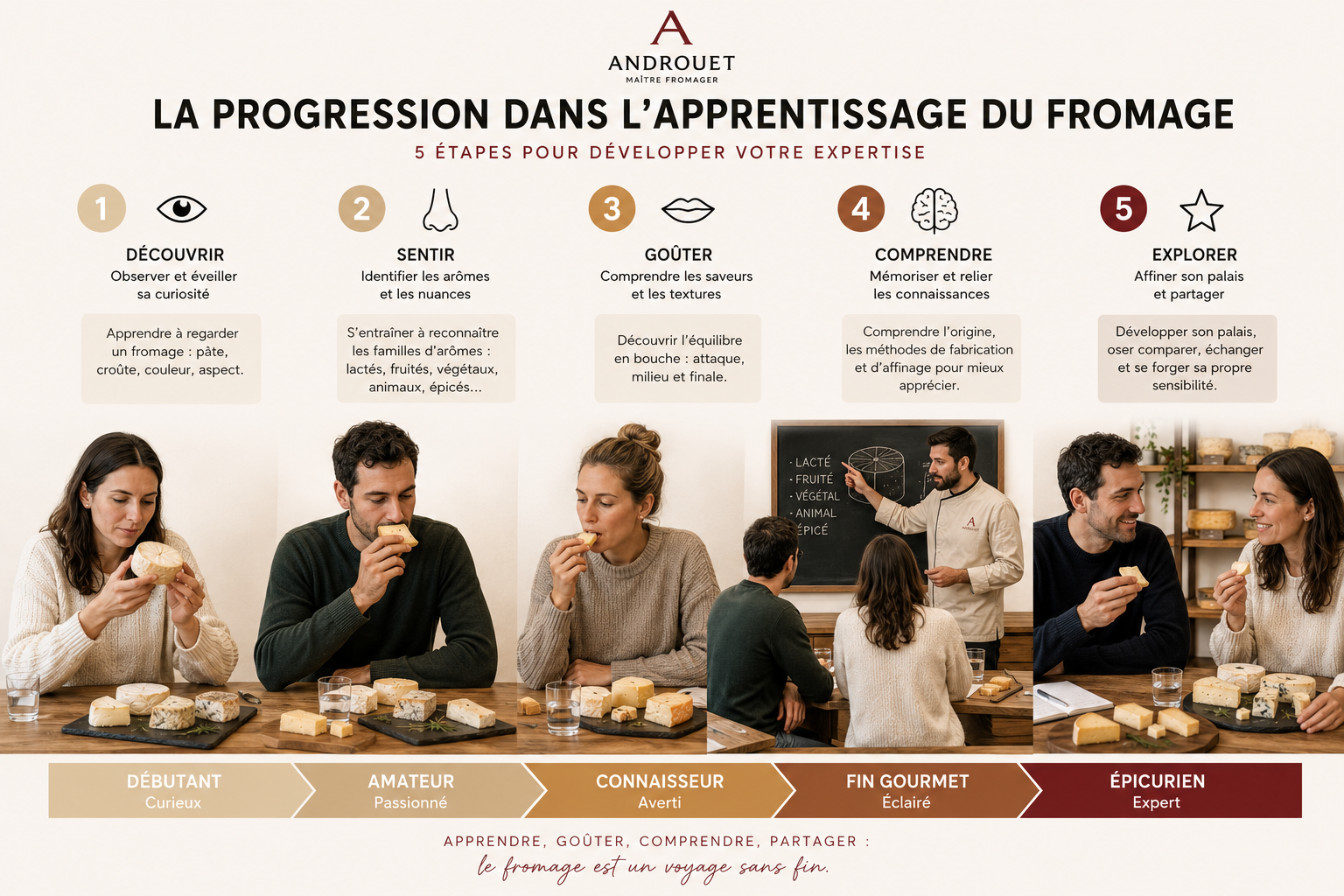
They taste regularly, compare cheeses, take notes, exchange impressions, and observe how products evolve over time.
Through this process, they develop a highly refined sensory memory.
This expertise is built through thousands of tastings carried out over the course of a career.
Very often.
Alongside the great classics of French cheesemaking, Androuet workshops regularly feature small-production cheeses, seasonal specialties, and discoveries sourced from trusted producers.
These tastings encourage participants to move beyond familiar choices and deepen their knowledge of cheese.
That is perfectly normal.
The purpose of a workshop is not to make everyone enjoy every cheese.
Understanding why a cheese appeals to you—or why it does not—is already valuable.
Our Master Cheesemongers encourage participants to express their impressions freely.
Very often, a cheese that does not immediately please becomes more interesting once its story, affinage, or terroir is understood.
It is also common for participants to change their minds after tasting the same family again in a different style or at another stage of maturity.
Because an Androuet workshop is far more than a tasting.
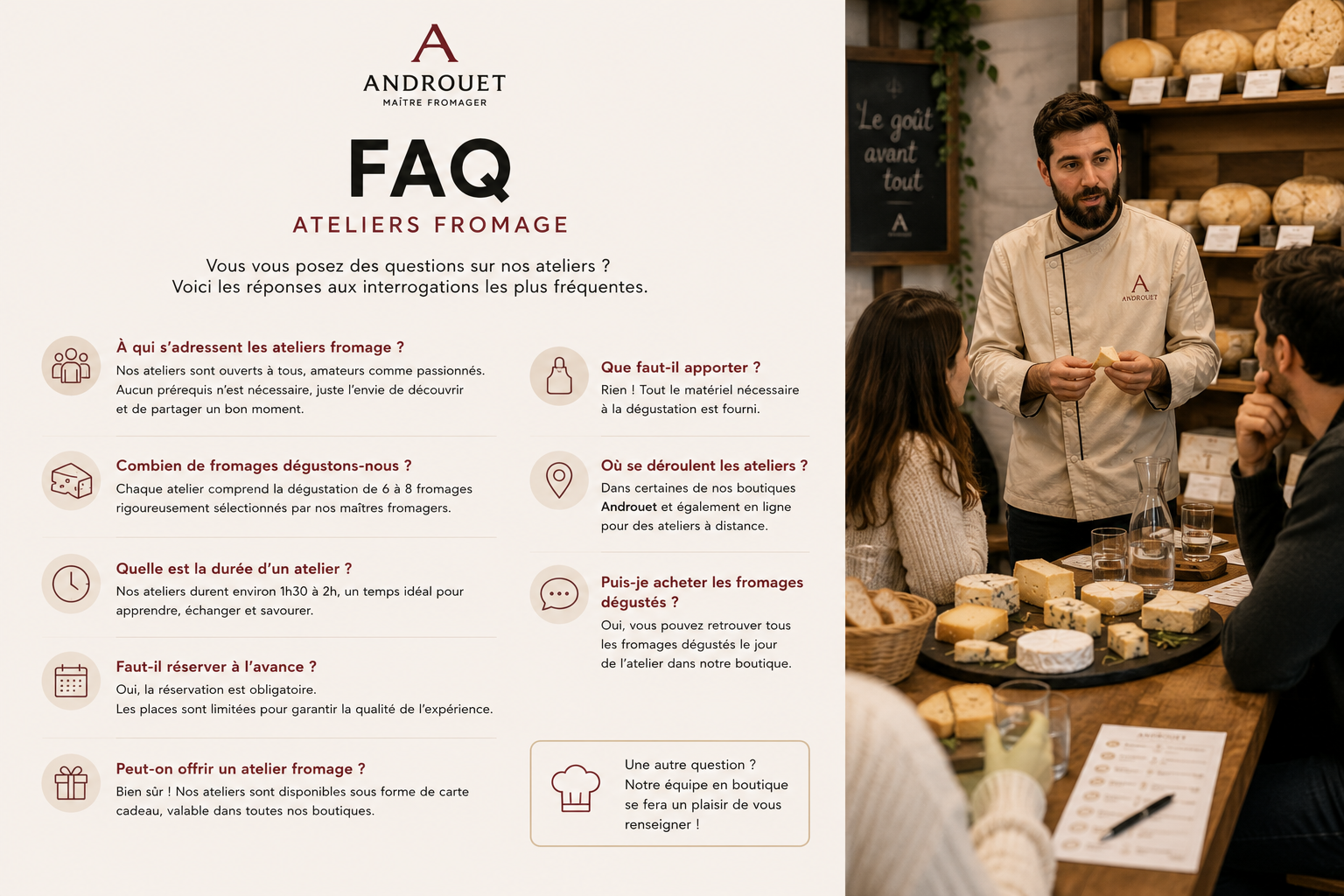
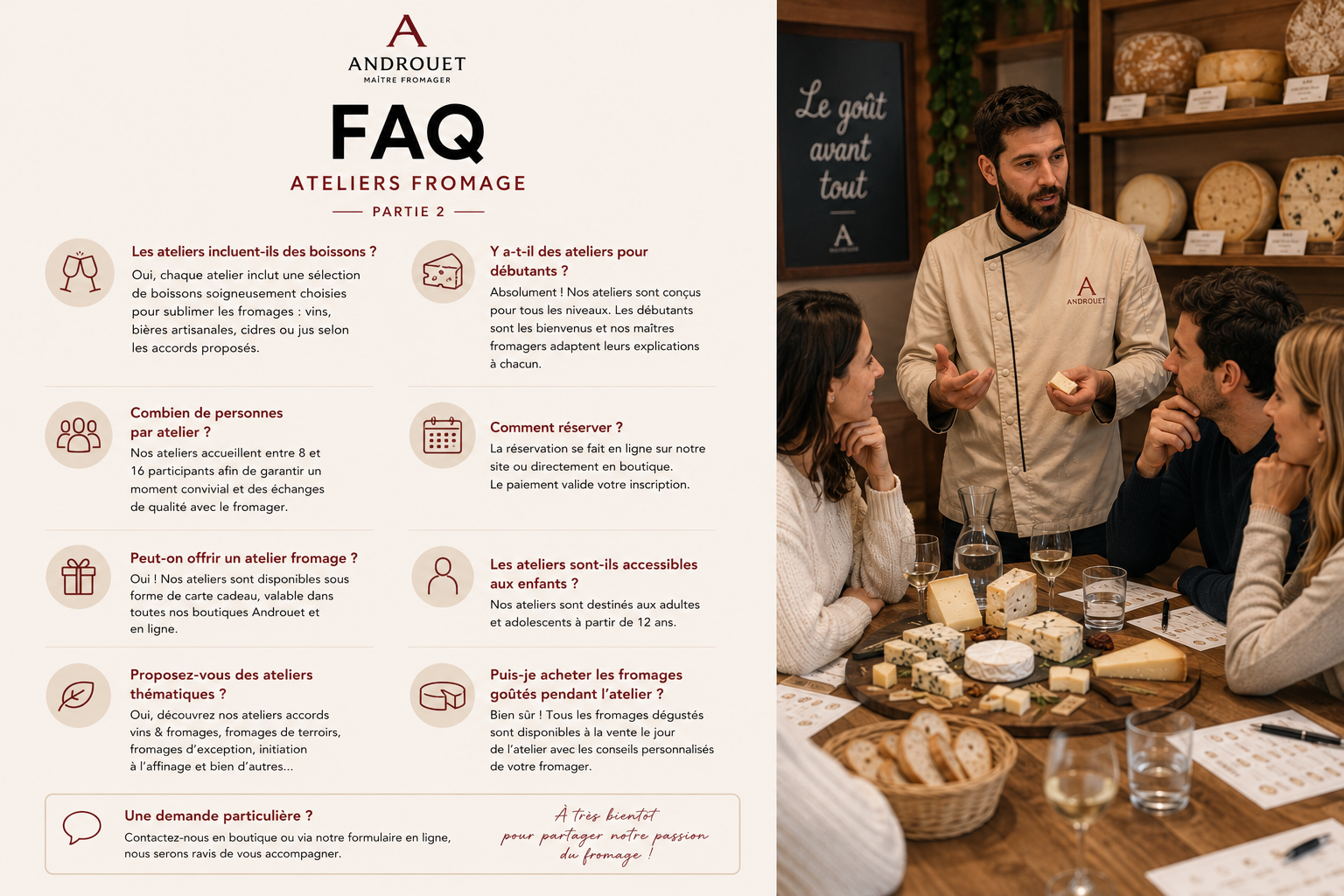
It is an immersion in expertise passed down since 1909, an encounter with passionate Master Cheesemongers, an exploration of French and European terroirs, and an invitation to understand cheese in all its richness.
You will learn how to observe, smell, taste, compare, and choose cheese with a completely new perspective.
Whether you are a beginner, an enthusiast, or an experienced gastronome, every workshop is designed to deepen your knowledge while offering a warm and convivial experience.
As one of our Master Cheesemongers often says:
“Our greatest satisfaction is not simply that someone discovers a new cheese. It is that they leave looking at every cheese differently.”
To discover upcoming workshops or give a cheese tasting as a gift, explore the complete Androuet workshop program.
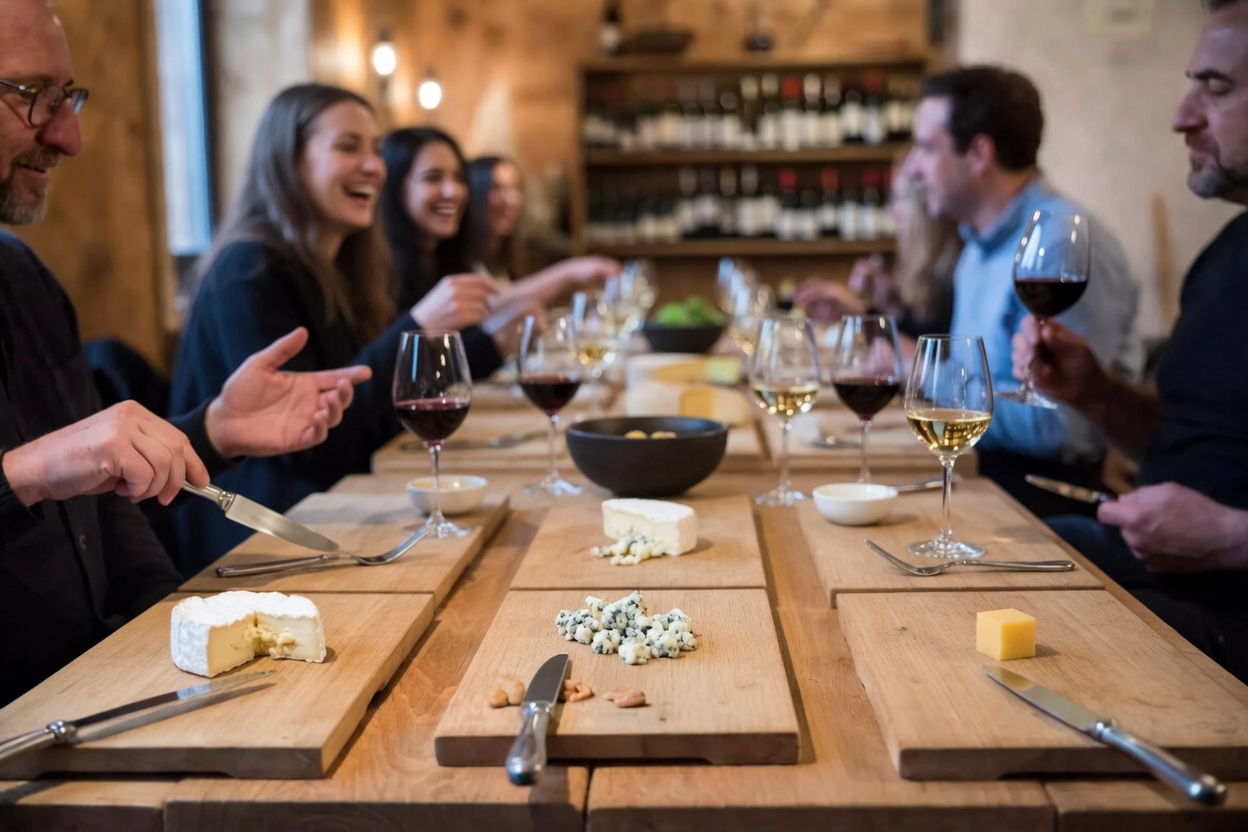
“Cheese discovery” workshop in Paris
Come and learn the subtle art of cheese and its pairings with our cheesemonger and affineur—an expert in the science of cheese.
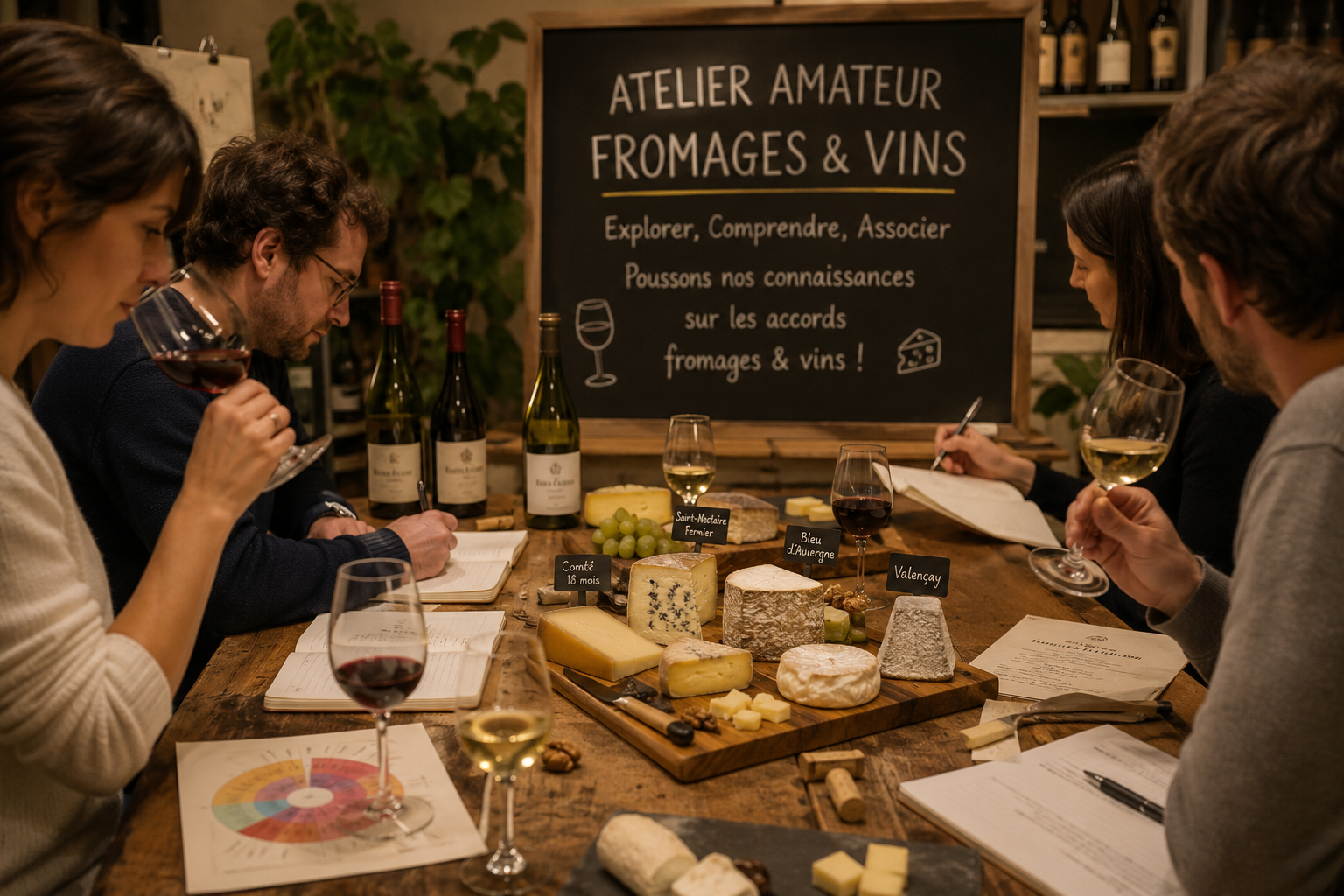
“Cheese enthusiast” workshop in Paris
Deepen your knowledge with this workshop on cheese and wine pairings.
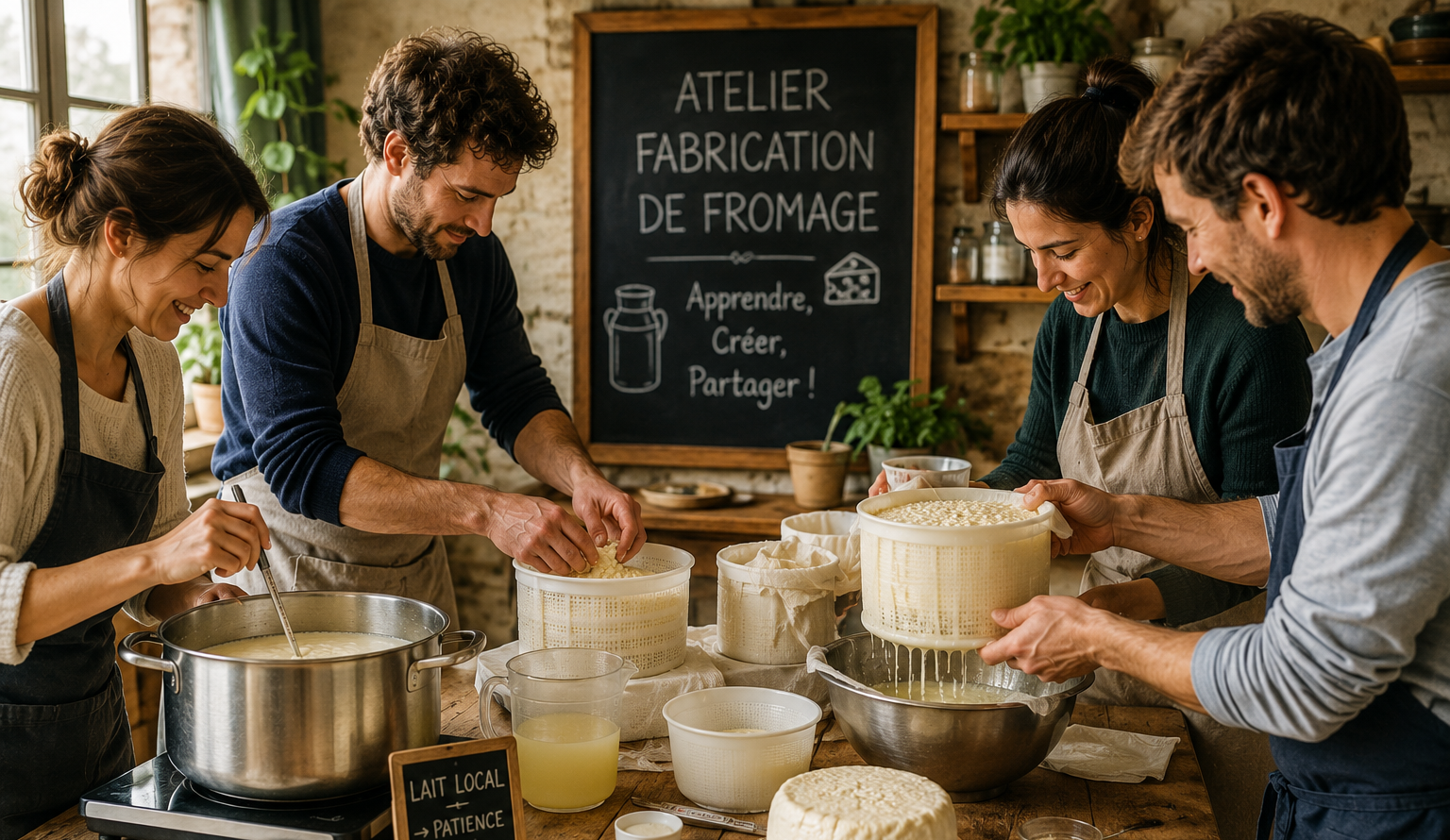
Cheese-making workshop in Paris
Learn how to make 3 cheeses.
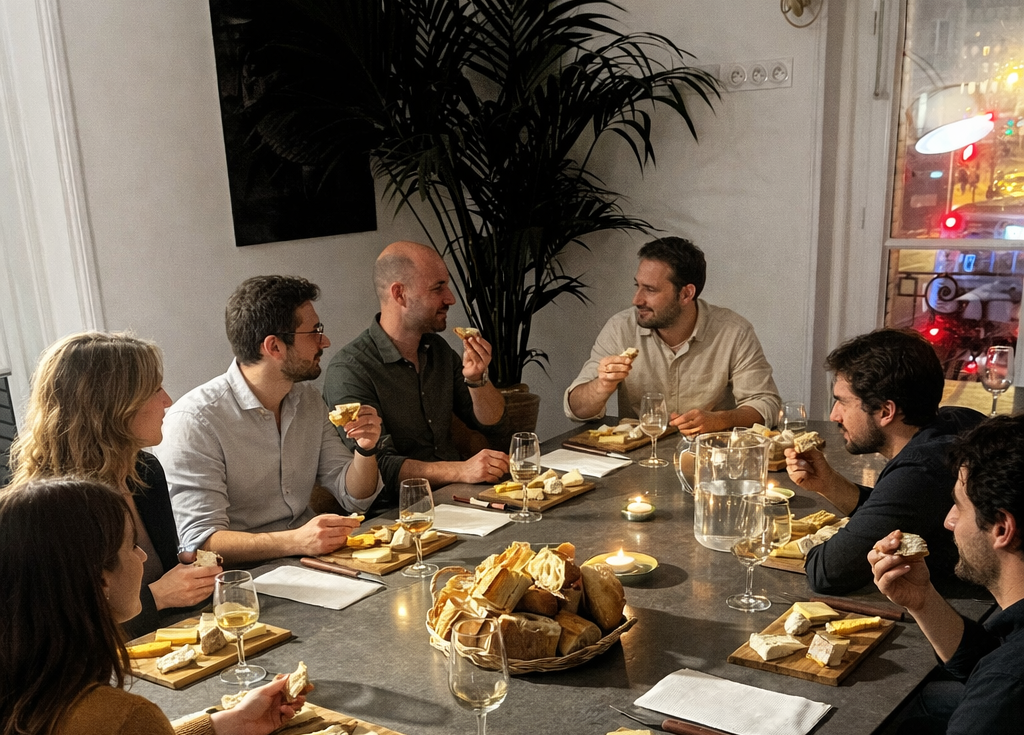
The “Secrets of Cheese” workshop in Paris
Learn, taste, and have fun. Come and discover this introduction to the art of cheese tasting. Learn to put your sensory impressions into words—all in a fun and cheerful atmosphere!
An Androuet exclusive.
Explore our guide to know everything about cheese from A to Z.