Article

Anyone can learn how to taste cheese.
But almost everyone begins by making the same mistakes.
That is perfectly normal.
We may learn how to taste wine, coffee, or even chocolate, yet very few people have ever received a genuine introduction to cheese tasting.
For more than 115 years, Androuet Master Cheesemongers have observed the habits of thousands of customers and workshop participants. Over time, the same mistakes appear again and again.
The good news is that they are very easy to correct.
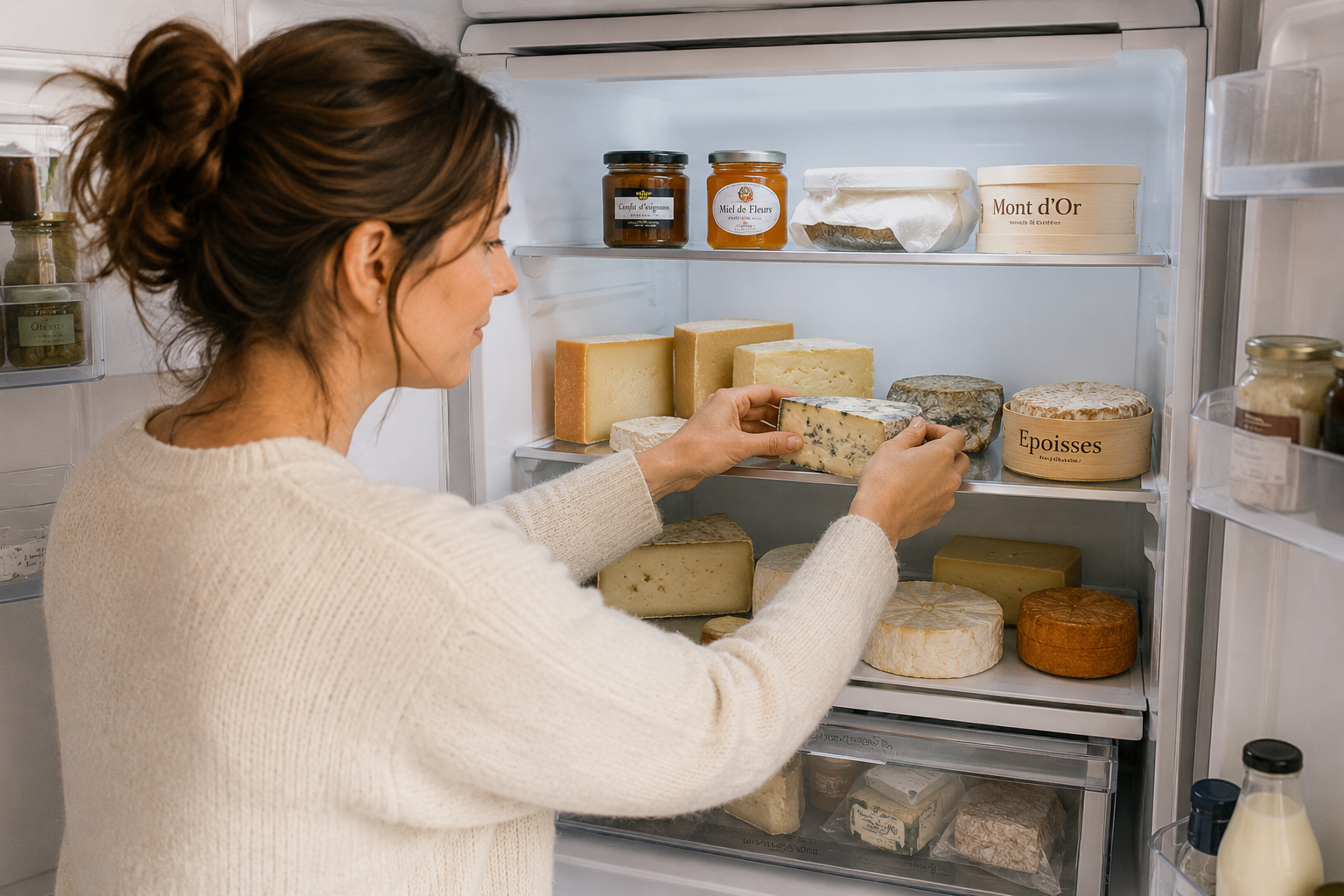
This is probably the most common mistake.
Cold temperatures harden the fat and mute a large part of the cheese’s aroma.
A cheese tasted at 4°C often seems firmer, less fragrant, and less complex than it truly is.
Depending on the family, it is usually best to remove cheese from the refrigerator 30 minutes to one hour before serving. Larger pieces may need even longer.
“A cheese served too cold is like a concert with half the sound turned off.”
— Nicolas, Androuet Master Cheesemonger
Many people assume that a cheese’s name tells them everything they need to know.
Yet two Comtés, two Camemberts, or two Saint-Nectaires can taste remarkably different.
The producer, the season, the milk, and above all the affinage all have a profound influence on the final result.
The name is a starting point, never a guarantee.
Tasting begins with the eyes.
The color of the rind, the appearance of the paste, its flexibility, and the presence of openings already provide valuable information.
Master Cheesemongers always observe before they taste.
The sense of smell plays a major role in how we perceive flavor.
Yet many people go straight to tasting.
Taking a few seconds to smell the cheese can already reveal its main aromatic families.
Cheese evolves in the mouth.
The first few seconds tell only part of the story.
Allow it to melt slowly.
Breathe.
Notice how it changes.
The finest aromas often appear only after a few moments.
If you taste Roquefort before Brie de Meaux, the Brie may seem far more muted than it really is.
A tasting should generally progress from the most delicate cheeses to the most intense:
This order preserves the sensitivity of the palate.
Some washed-rind cheeses have an impressively powerful aroma.
Yet their flavor can be surprisingly delicate.
Conversely, cheeses that smell relatively mild may reveal remarkable complexity on the palate.
Never judge a cheese by aroma alone.
Age is not everything.
Every cheese has an ideal tasting window.
Before that moment, it may lack expression.
Afterwards, it may begin to lose its balance.
The role of the Master Cheesemonger is precisely to identify that moment.
“Our profession is less about selling cheese than choosing the right day to offer it.”
— Claire, Androuet Master Cheesemonger
“I don’t like goat’s cheese.”
“I don’t like blue cheese.”
“I don’t like washed rinds.”
We hear these phrases very often.
In reality, every family contains an extraordinary range of textures, intensities, and aromatic profiles.
During our workshops, participants regularly discover a new favorite in a category they thought they disliked.
A fresh cheese, a 30-month Comté, and an Époisses do not respond in exactly the same way to temperature.
Serving temperature has a major effect on texture and aroma.
It may seem like a small detail, but it can transform the tasting.
Cutting a blue cheese and then using the same knife on a goat’s cheese without cleaning it can alter both flavor and appearance.
During professional tastings, knives are cleaned regularly to preserve the identity of each cheese.
Some rinds are entirely edible and contribute fully to the character of the cheese.
Others are primarily technical or protective.
Learning to distinguish between them is one of the useful skills taught during our workshops.
The way a cheese is cut is never insignificant.
The aim is to give every guest a balanced proportion of rind and interior paste.
Poor cutting can deprive some people of an essential part of the experience.
Tasting is a personal experience.
Two people may perceive different nuances in the same cheese.
Neither is necessarily wrong.
Vocabulary helps us share sensations. It should never be used to impose one single truth.
Cheese does not pair only with red wine.
Depending on the cheese, white wine, cider, craft beer, tea, or Champagne may reveal far more of its personality.
Exploring pairings is one of the great pleasures of tasting.
Curiosity is the best way to improve.
Every new discovery enriches your tasting memory and helps refine your preferences.
Cheese is a living product.
The season influences:
The same cheese tasted in spring and winter may offer very different profiles.
Producers are often discussed, while affineurs receive far less attention.
Yet much of a cheese’s personality develops during maturation.
Temperature, humidity, turning, brushing, and care of the rind all shape the final result.
Intensity is not a measure of quality.
The greatest cheeses are often those with the finest balance.
Finesse, length, harmony, and complexity matter far more than sheer power.
This may be the greatest mistake of all.
The best tasters are not necessarily those who know the greatest number of names.
They are the people who take time to observe, compare, and remain curious.
Tasting is a skill that develops gradually.
Like any passion.
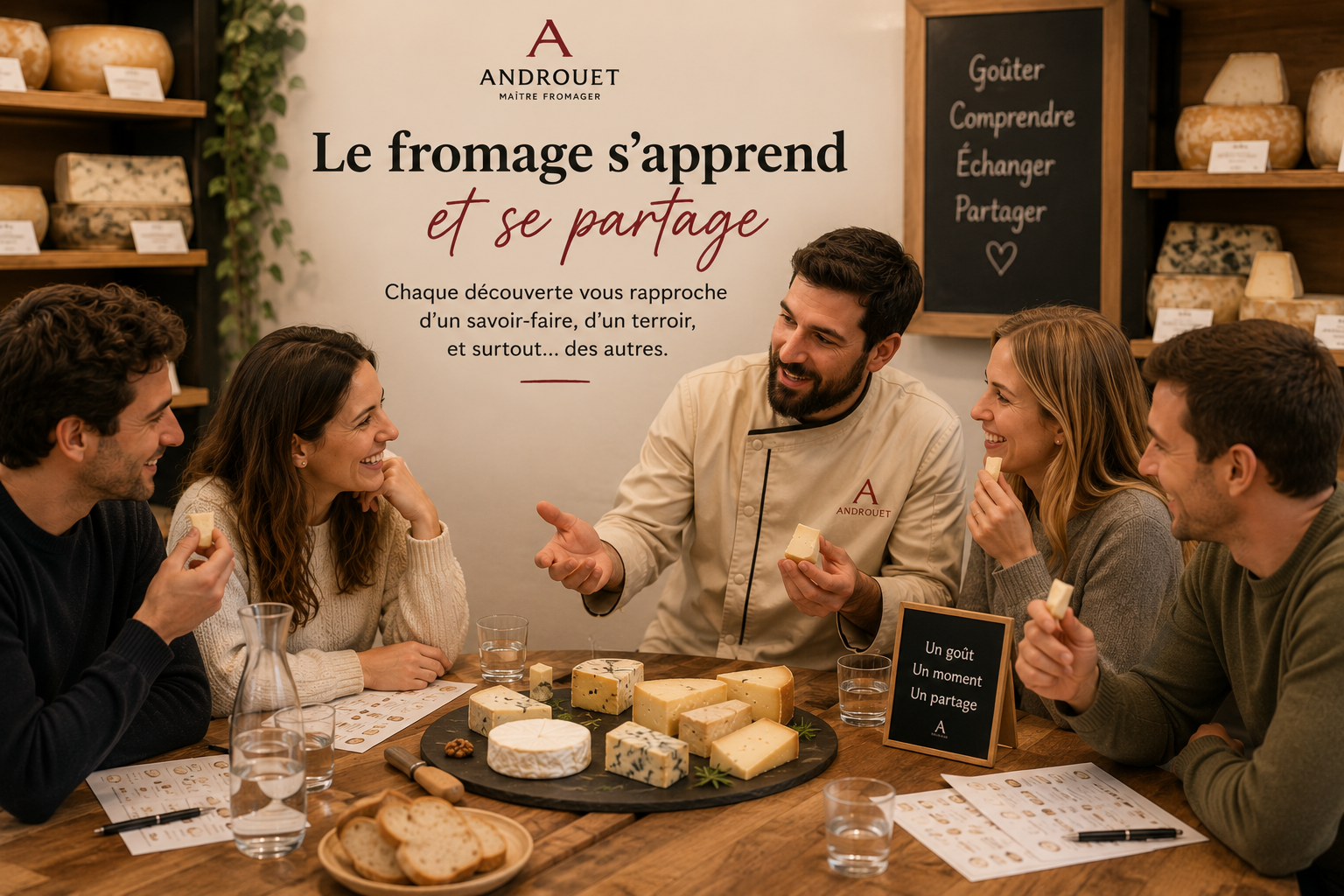
At the beginning of many workshops, we ask participants which cheeses they believe they do not like.
The answers are often the same:
Blue cheeses, highly matured goat’s cheeses, and washed-rind cheeses.
By the end of the session, those same cheeses frequently appear among their favorites.
Why?
Because they have been tasted at the right moment, in the right order, and with the explanations needed to understand them.
This perfectly captures the philosophy of Androuet workshops:
The aim is not to persuade, but to help people discover.
Reading advice is useful.
Applying it is what truly changes the tasting experience.
By simply developing the habit of observing a cheese, smelling it, respecting its serving temperature, tasting it slowly, and comparing your sensations, you will make rapid progress.
That is exactly what Androuet workshops are designed to encourage.
For more than 115 years, our Master Cheesemongers have passed on these simple gestures that permanently change the way people experience cheese.
Because learning to avoid the most common mistakes is already the first step toward tasting like a professional.
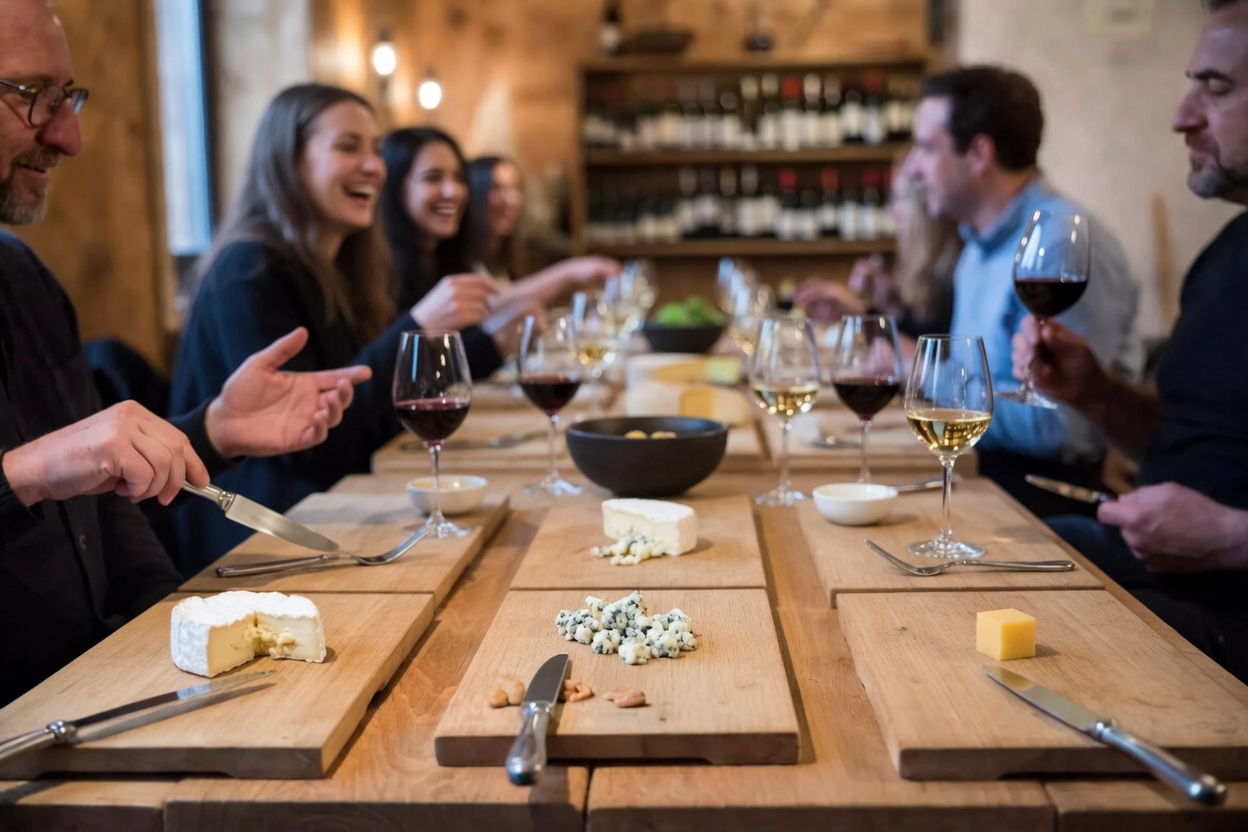
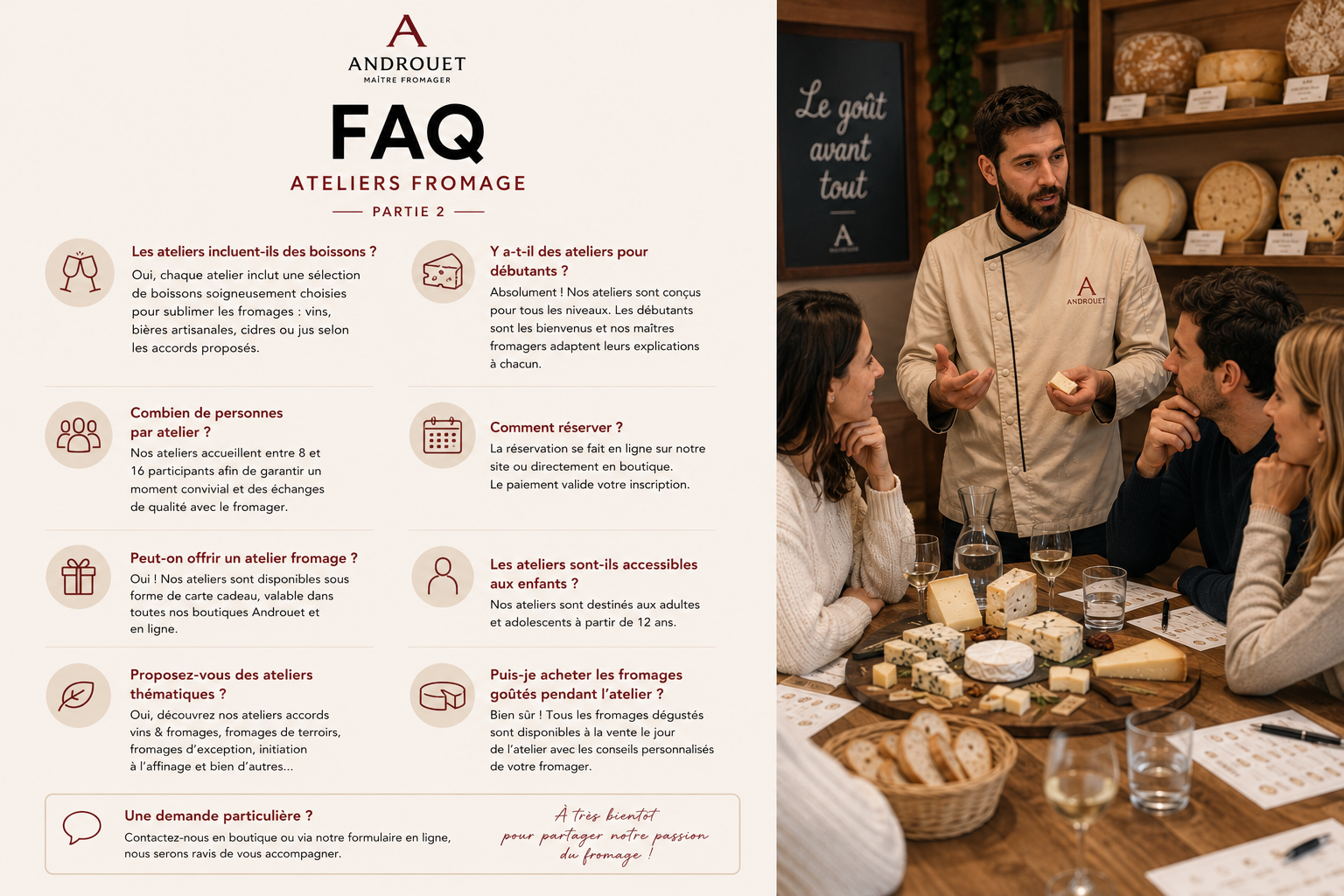
“Cheese discovery” workshop in Paris
Come and learn the subtle art of cheese and its pairings with our cheesemonger and affineur—an expert in the science of cheese.
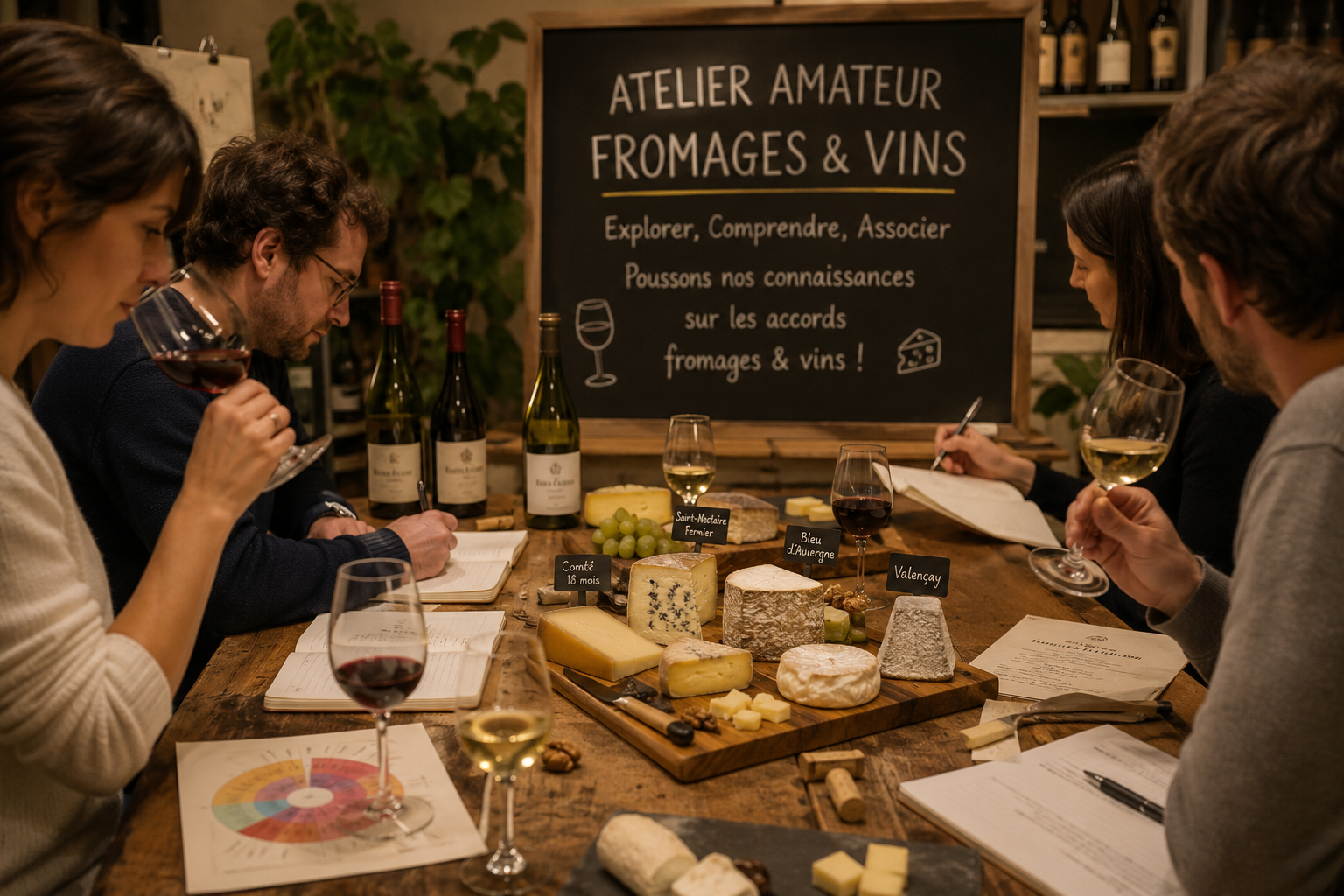
“Cheese enthusiast” workshop in Paris
Deepen your knowledge with this workshop on cheese and wine pairings.
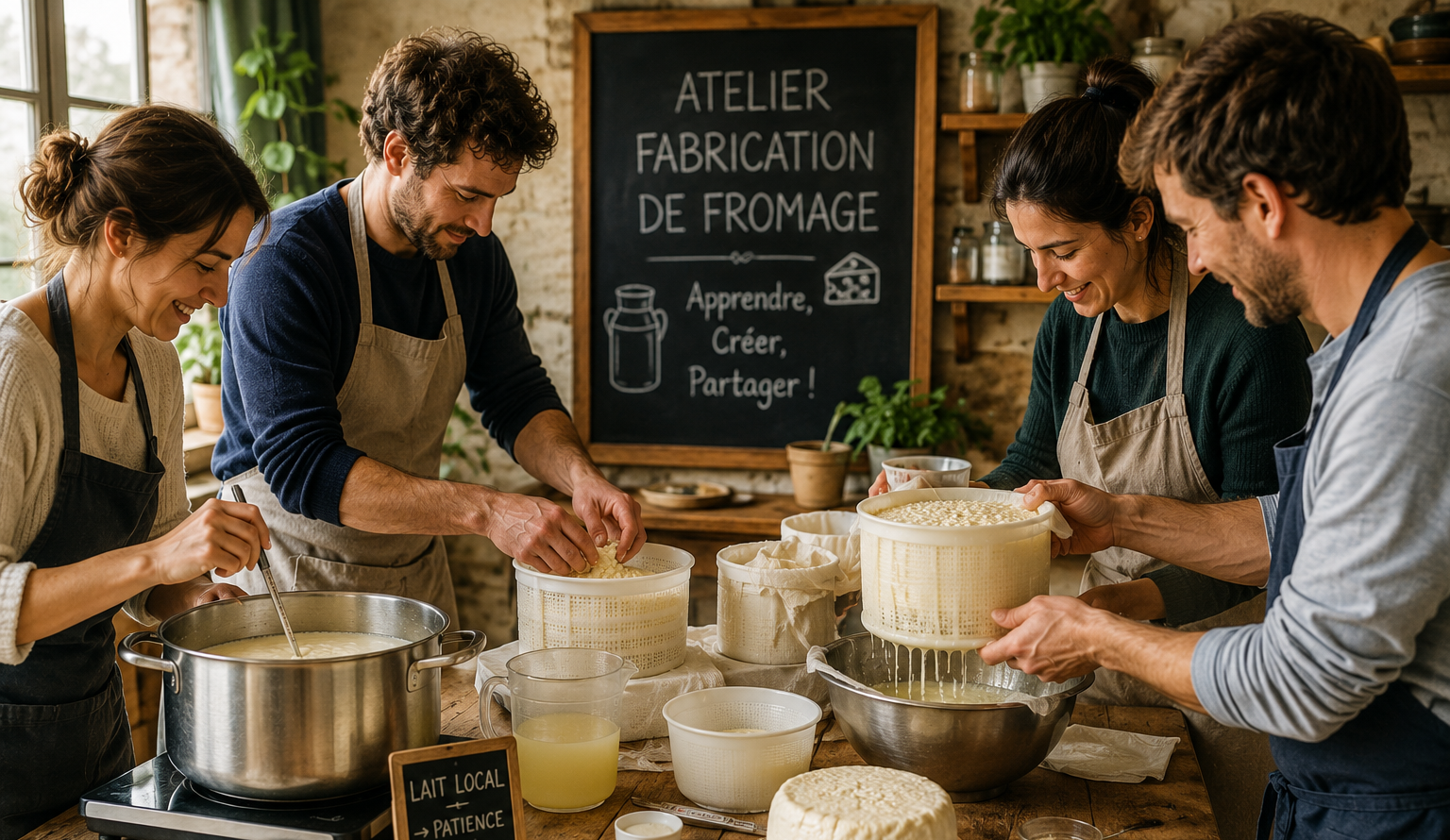
Cheese-making workshop in Paris
Learn how to make 3 cheeses.
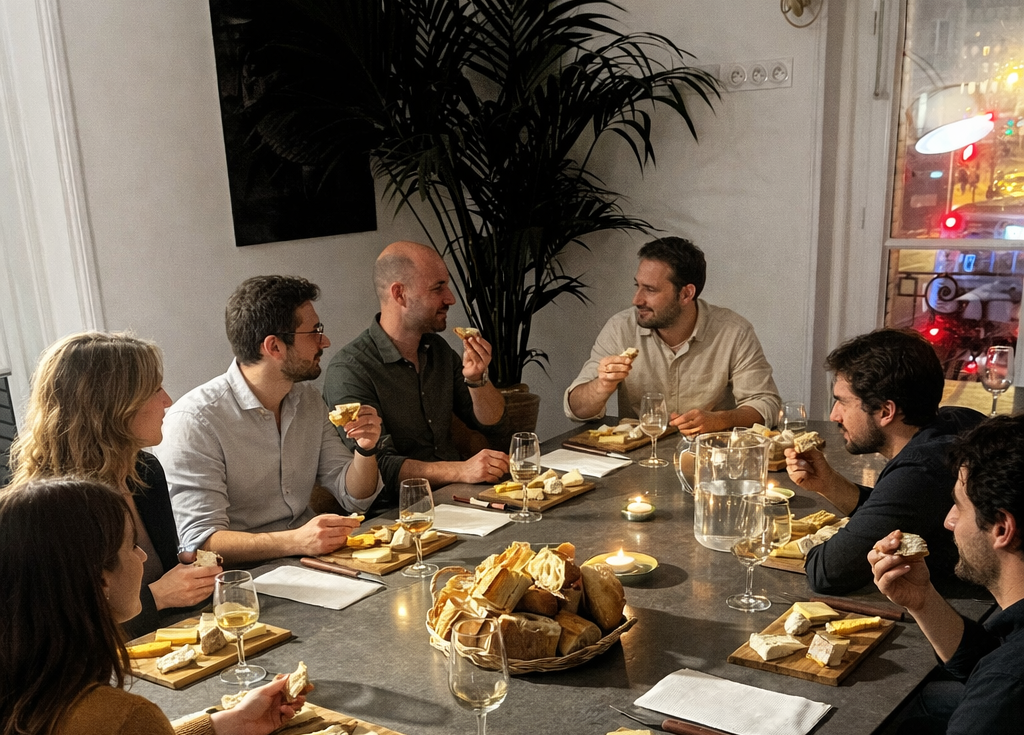
The “Secrets of Cheese” workshop in Paris
Learn, taste, and have fun. Come and discover this introduction to the art of cheese tasting. Learn to put your sensory impressions into words—all in a fun and cheerful atmosphere!
An Androuet exclusive.
Explore our guide to know everything about cheese from A to Z.