Article

Acheter du fromage Androuet maintenant
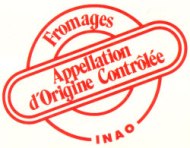
Le fromage AOC (Appellations d’origine contrôlée) identifie un produit, l’authenticité et la typicité de son origine géographique. Le fromage AOC garantie une qualité, des caractéristiques, un terroir d’origine, un savoir-faire du producteur de fromage AOC, une antériorité et la notoriété d’un procédé et de son nom qui sont trop ancien pour faire l’objet d’un brevet.
Fromage AOC
La quantité et le contrôle d’étiquetage du fromage AOC répond à un cahier des charges validé, en France, par l’INAO (Institut National des Appellations d’Origine) dépendant du ministère de l’agriculture.
L’objectif de ces signes de qualité est de les rendre facilement reconnaissables. Le fromage AOC est soit marqué au talon (encre alimentaire ou gravure), soit reconnaissable à leur étiquette ou à une plaque de caséine (matériau alimentaire). L’étiquette du fromage AOC indique un numéro ainsi que l’organisme certificateur. La couleur de la plaque de caséine indique la classification : verte pour les produits fermiers et rouge pour les produits laitiers.
Voici la liste des 46 fromages AOC bénéficiant de l’appellation d’origine contrôlée française et la date de l’accession au statut :
Brebis – Fromage AOC
Ossau-Iraty , fromage AOC depuis 1980
Brocciu , fromage AOC depuis 1998
Roquefort, fromage AOC depuis 1925
Chèvre – Fromage AOC
Banon de Banon, fromage AOC depuis 2003
Chabichou du Poitou, fromage AOC depuis 1990
Charolais, fromage AOC depuis 2010
Chevrotin , fromage AOC depuis 2002
Crottin de Chavignol , fromage AOC depuis 1976
Mâconnais , fromage AOC depuis 2006
Pélardon, fromage AOC depuis 2000
Picodon, fromage AOC depuis 1983
Pouligny-Saint-Pierre, fromage AOC depuis 1972
Rigotte de Condrieu , fromage AOC depuis 2008
Rocamadour , fromage AOC depuis 1996
Sainte-Maure-de-Touraine , fromage AOC depuis 1990
Selles-sur-Cher, fromage AOC depuis 1975
Valencay, fromage AOC depuis 1998
Vache – Fromage AOC
Abondance, fromage AOC depuis 1990
Beaufort, fromage AOC depuis 1968
Bleu d’Auvergne , fromage AOC depuis 1975
Bleu de Gex , fromage AOC depuis 1977
Bleu des Causses, fromage AOC depuis 1991
Bleu du Vercors-Sassenage , fromage AOC depuis 1998
Brie de Meaux , fromage AOC depuis 1980
Brie de Melun , fromage AOC depuis 1980
Camembert de Normandie , fromage AOC depuis 1983
Cantal, fromage AOC depuis 1956
Chaource, fromage AOC depuis 1970
Comté, fromage AOC depuis 1958
Epoisses, fromage AOC depuis 1991
Fourme d’Ambert, fromage AOC depuis 1972
Fourme de Montbrison, fromage AOC depuis 1972
Gruyère français, fromage AOC depuis
Laguiole, fromage AOC depuis 1961
Langres , fromage AOC depuis 1991
Livarot, fromage AOC depuis 1975
Maroilles, fromage AOC depuis 1976
Mont d Or, fromage AOC depuis 1981
Morbier, fromage AOC depuis 2000
Munster, fromage AOC depuis 1969
Coeur de Neufchâtel , fromage AOC depuis 1969
Pont l’Evêque, fromage AOC depuis 1972
Reblochon de Savoie, fromage AOC depuis 1958
Saint-Nectaire, fromage AOC depuis 1955
Salers , fromage AOC depuis 1961
Tome des Bauges , fromage AOC depuis 2002
FROMAGE AOC : Lien INAO (Institut National de l’Origine et de la Qualité).
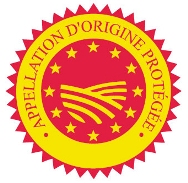
Dans le cadre d’une harmonisation des appellations d’origine européennes, le logo AOP devient obligatoire à partir du 1er mai 2009. Il remplacera le logo français AOC. Ainsi, toutes les appellations d’origine des pays membres arboreront le même logo, ce qui facilitera leur identification.
Lorem ipsum dolor sit amet consectetur. Nunc ullamcorper nisl vestibulum non sed quisque vel bibendum.