Article

Why does a Master Cheesemonger immediately notice nuances that most of us miss?
Is it a matter of natural talent—or simply a method that can be learned?
The answer is simple: tasting is a skill.
At Androuet, our Master Cheesemongers taste hundreds of cheeses every year. They are not merely deciding whether a cheese is “good” or “bad.” They are assessing how it is evolving, identifying the right moment to offer it for sale, and helping each customer find the cheese best suited to their tastes.
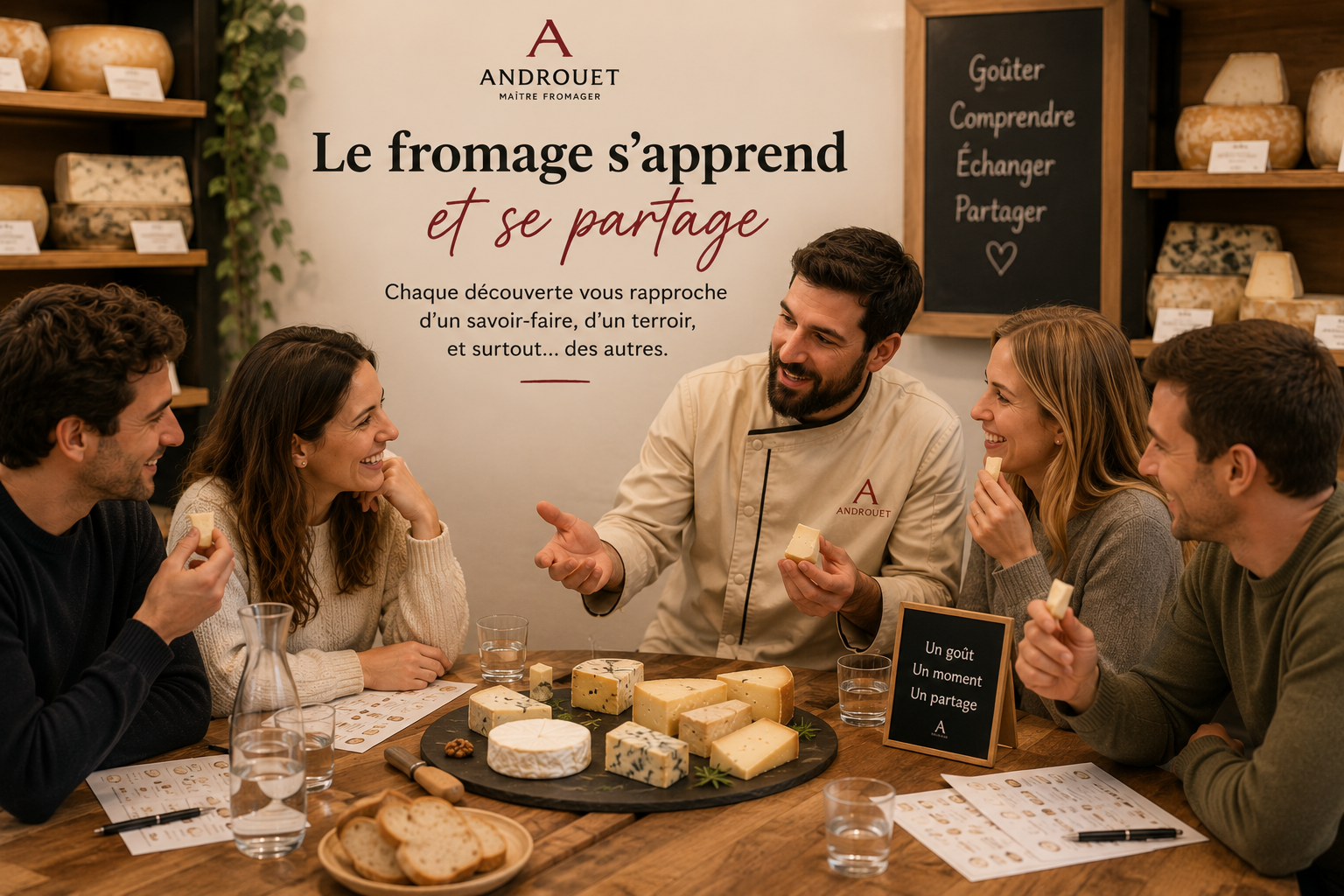
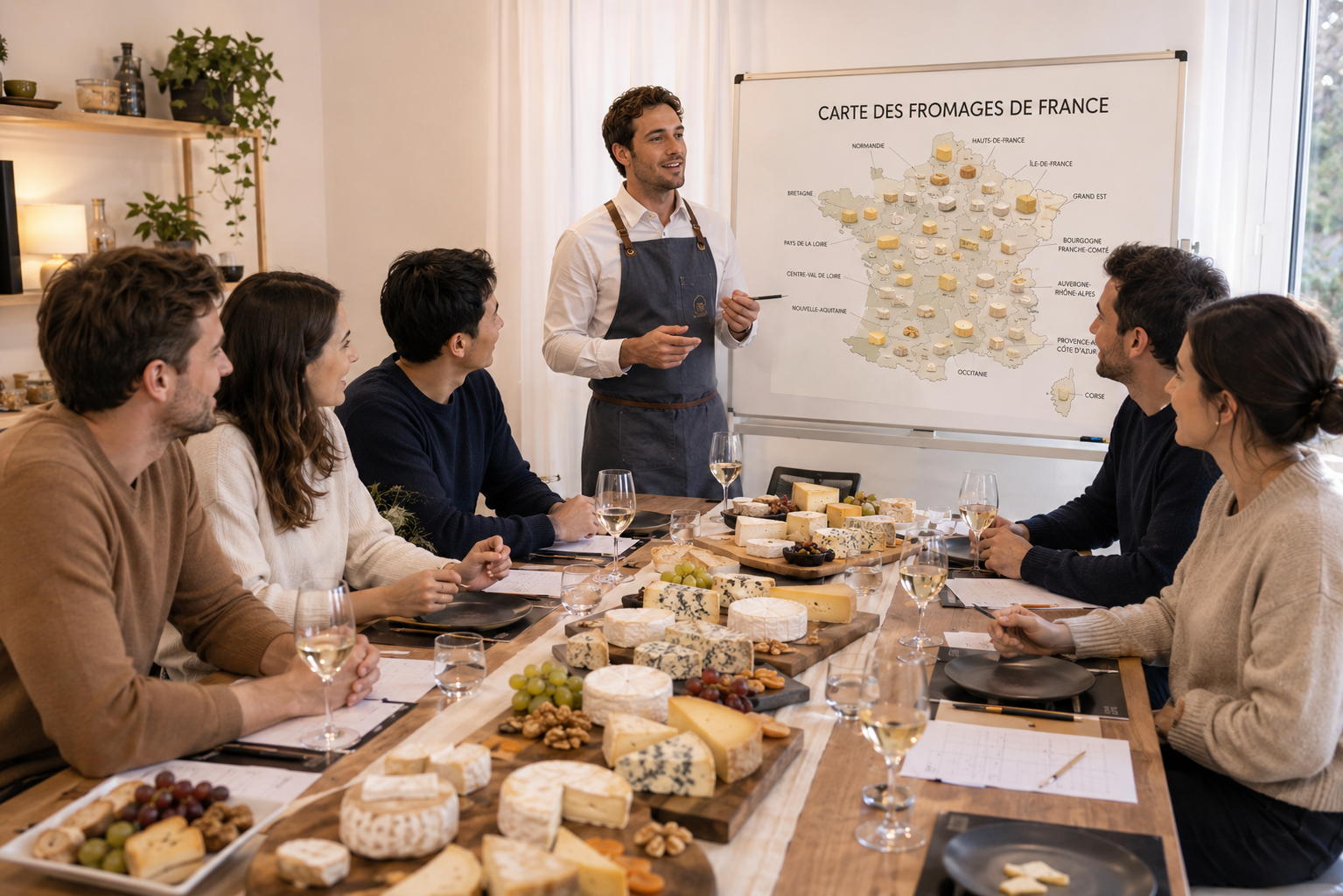
During our workshops, we share this tasting method in a way that is accessible to everyone.
With just a few simple habits, you can learn to appreciate cheese from an entirely new perspective.
A Master Cheesemonger never begins by immediately placing the cheese in their mouth.
The first step is always observation.
The rind, the color of the interior paste, its flexibility, any openings or eyes, and the appearance of the cut surface already reveal a great deal.
Within seconds, an experienced cheesemonger can begin to assess:
“A cheese begins to speak before you even taste it. You simply have to learn how to look.”
— Nicolas, Androuet Master Cheesemonger
Before tasting comes the nose.
Aromas often reveal the identity and personality of a cheese.
A Master Cheesemonger may look for broad aromatic families such as:
The aim is not to identify one exact aroma at all costs.
Instead, you gradually build an overall impression of the cheese.
Even before the first bite, texture tells a story.
Is the cheese:
These characteristics are directly linked to the type of milk, the production method, and above all the work of cheese aging, or affinage.
During our workshops, participants discover that the pressure of a knife or a close look at the cut surface can already provide clues about the tasting experience to come.
A cheese does not reveal all its aromas immediately.
Master Cheesemongers allow the tasting to unfold over time.
They pay attention to:
Every stage provides new information.
“The first flavor is rarely the most interesting. The finest sensations often appear a few seconds later.”
— Claire, Androuet Master Cheesemonger
Two cheeses with exactly the same name can offer completely different tasting experiences.
Why?
Because time profoundly transforms their personality.
During our workshops, you will learn how to recognize:
You will also discover why just a few extra days in the aging cellar can completely change a cheese’s texture, intensity, or aromatic balance.
Master Cheesemongers avoid describing a cheese as simply “good” or “bad.”
Their first objective is to understand what defines it.
Every tasting becomes an exercise in comparison.
For example, a cheese may be:
This approach gradually develops your tasting memory and helps you recognize the characteristics you enjoy most.
Many participants begin a workshop by simply saying:
“I like it.”
After tasting several cheeses, they naturally begin to describe:
The aim is not to use complicated or pretentious vocabulary.
It is simply to express more precisely what you are experiencing.
A cheese is never shaped by a single factor.
Its personality is the result of its entire history:
It is this combination that makes every tasting different.
Our Master Cheesemongers take time to explain these connections so that every bite becomes more meaningful.
In our aging cellars, the same cheese may sometimes be tasted several times in a single week.
Why?
Because a living cheese changes every day.
A Comté may gain greater aromatic length. A Brie may become creamier. A goat’s cheese may develop more delicacy and precision.
Our Master Cheesemongers often say that their profession is not only about selecting great cheeses.
It is also about choosing the perfect moment to introduce them.
“I learned that you should look at a cheese before tasting it. Since then, I have never experienced cheese in quite the same way.”
— Caroline, participant
“The advice is simple, practical, and immediately useful. Even at home, tasting cheese becomes much more enjoyable.”
— Philippe, participant
“I thought Master Cheesemongers simply had exceptional palates. I discovered that, above all, they have a real method.”
— Sophie, participant
No.
As with wine, coffee, or chocolate, tasting develops gradually through practice.
Androuet workshops provide simple reference points that soon become natural.
Yes.
With a little practice, everyone can learn to identify broad aromatic families and describe their sensations more clearly.
A tasting usually begins with the most delicate cheeses before progressing toward stronger and more intense flavors.
This sequence helps preserve the sensitivity of the palate.
They follow the same fundamental principles of observation and analysis, but they also share and compare their individual impressions.
This exchange of perspectives is part of what deepens their expertise.
Learning how to taste cheese like a Master Cheesemonger does not mean memorizing hundreds of varieties or using complicated terminology.
It means learning to observe, smell, compare, and take time to understand what you are tasting.
For more than 115 years, the House of Androuet has shared this culture of cheese with the same commitment:
To pass on expertise, awaken curiosity, and introduce every cheese at the moment when it expresses its full personality.
Would you like to discover this tasting method alongside our Master Cheesemongers?
👉 Explore all our cheese tasting and introductory workshops:
Why Join a Cheese Tasting Workshop?
What Happens During a Cheese Tasting Workshop? The Complete Guide Before Your First Tasting ?
What Will You Learn During a Cheese Workshop?
Can You Give a Cheese Workshop as a Gift? An Original Experience They’ll Truly Remember ?
What Is the Difference Between a Cheese Tasting and a Cheese Class?
Which Cheese Workshop Is Best for Beginners?
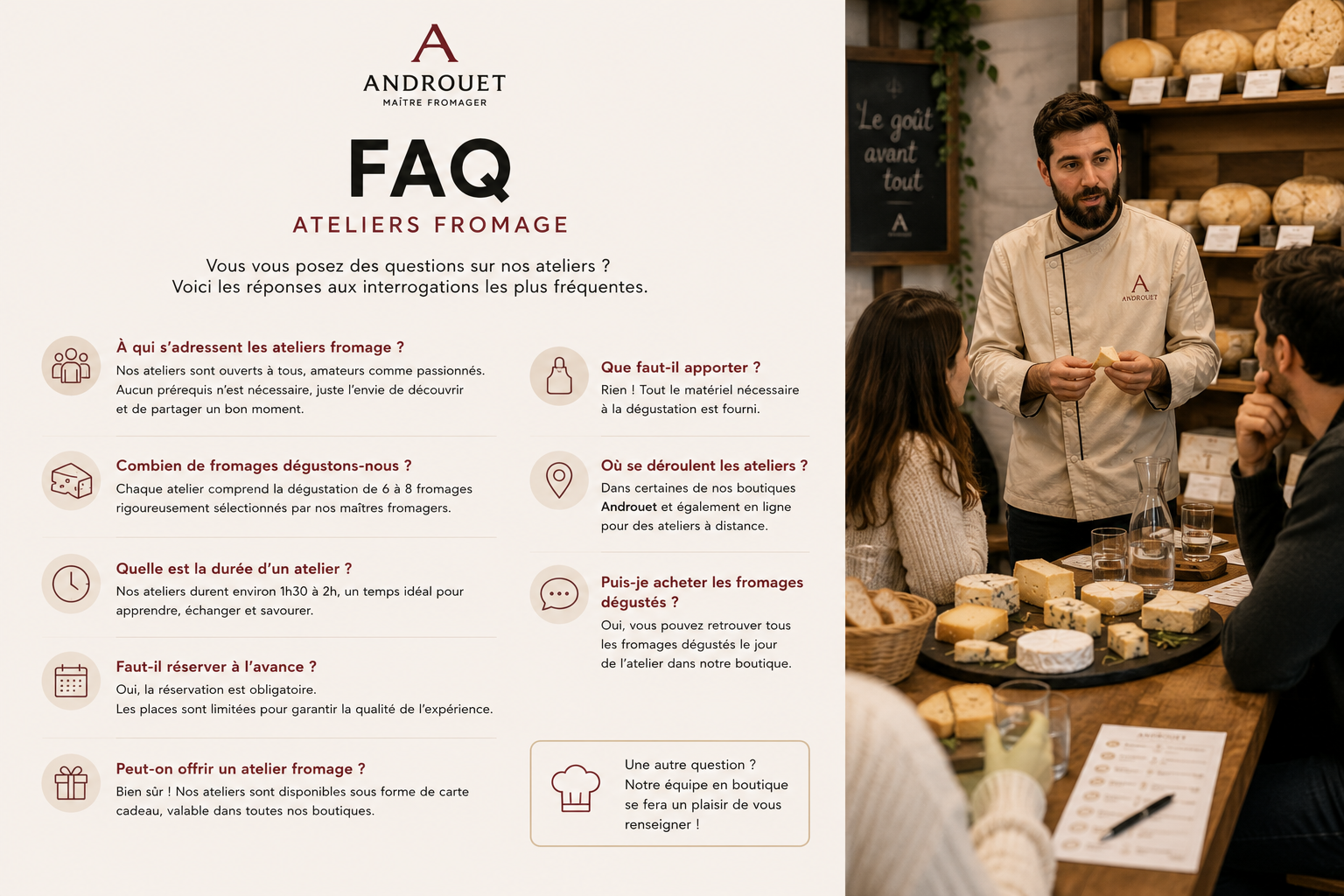
How Many Cheeses Do You Taste During a Cheese Workshop?
How Can You Learn to Recognize the Different Cheese Families During a Workshop?
How Do You Taste Cheese Like a Master Cheesemonger?
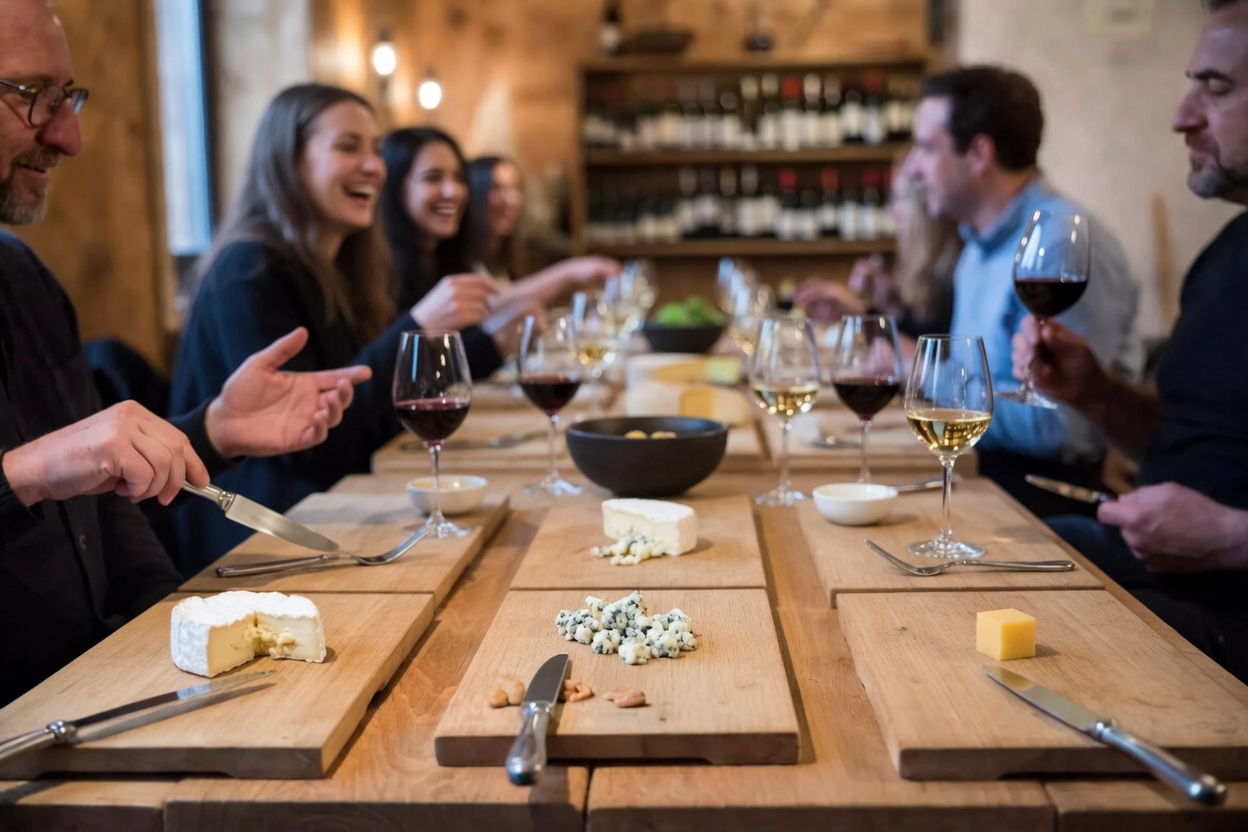
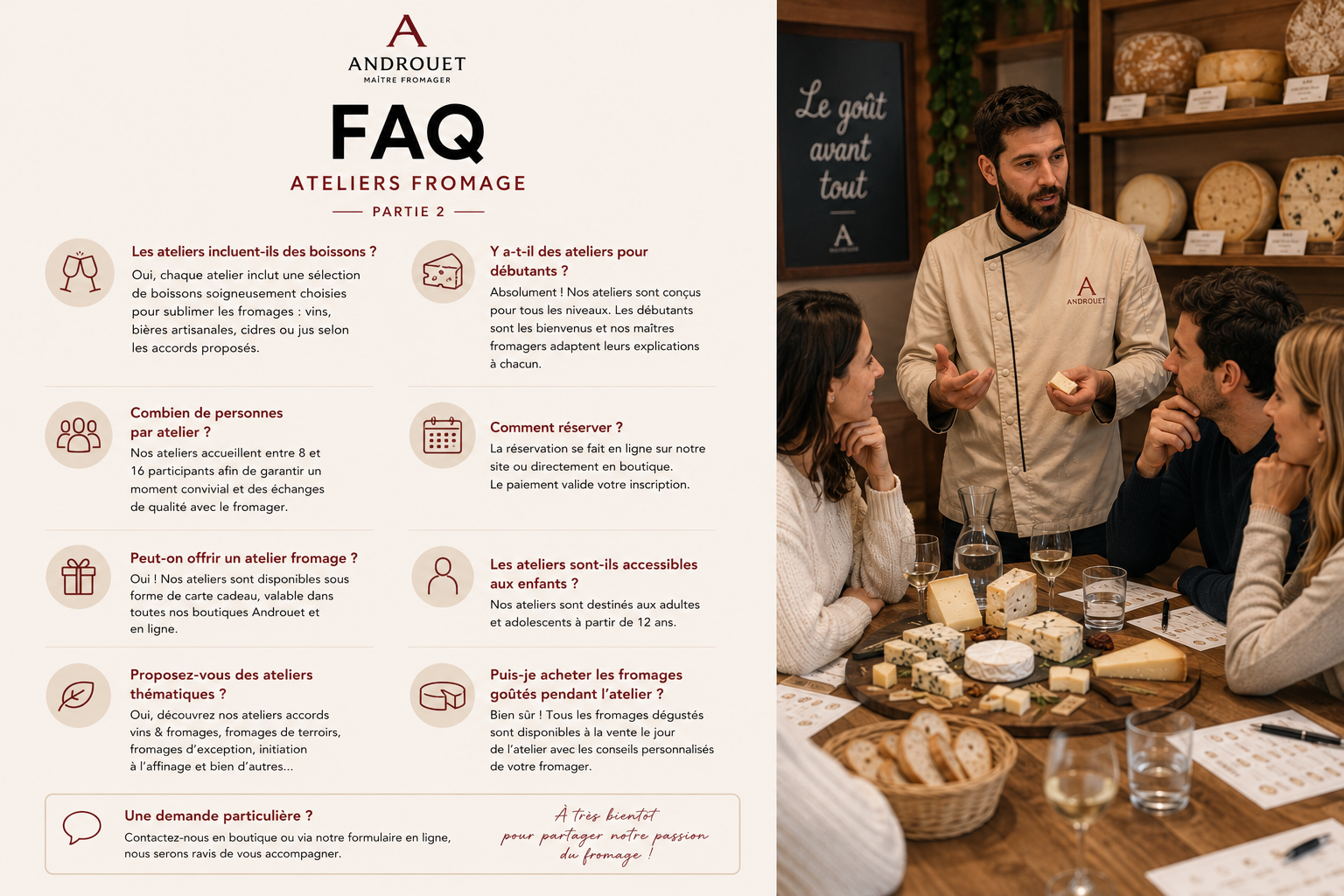
“Cheese discovery” workshop in Paris
Come and learn the subtle art of cheese and its pairings with our cheesemonger and affineur—an expert in the science of cheese.
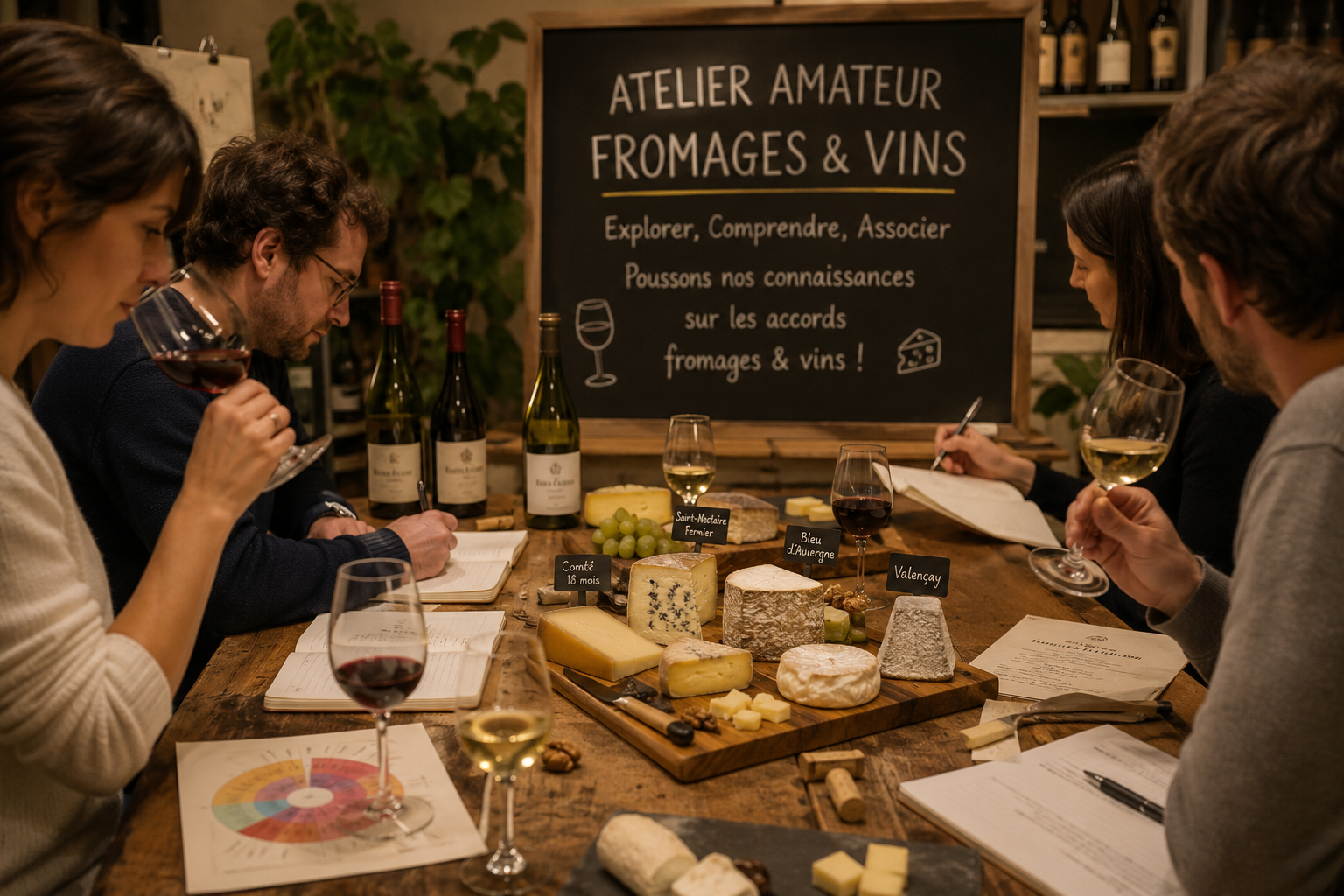
“Cheese enthusiast” workshop in Paris
Deepen your knowledge with this workshop on cheese and wine pairings.
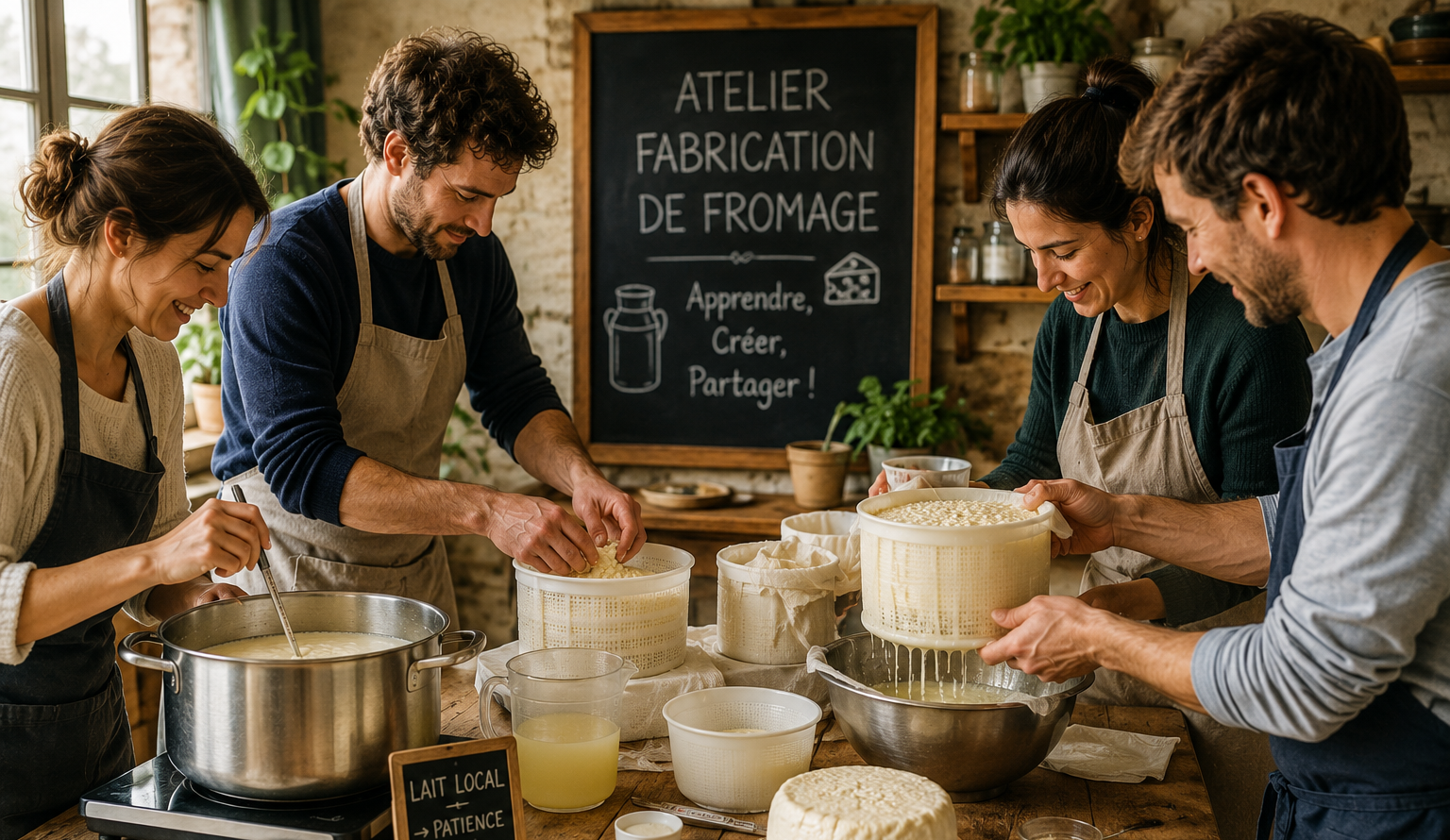
Cheese-making workshop in Paris
Learn how to make 3 cheeses.
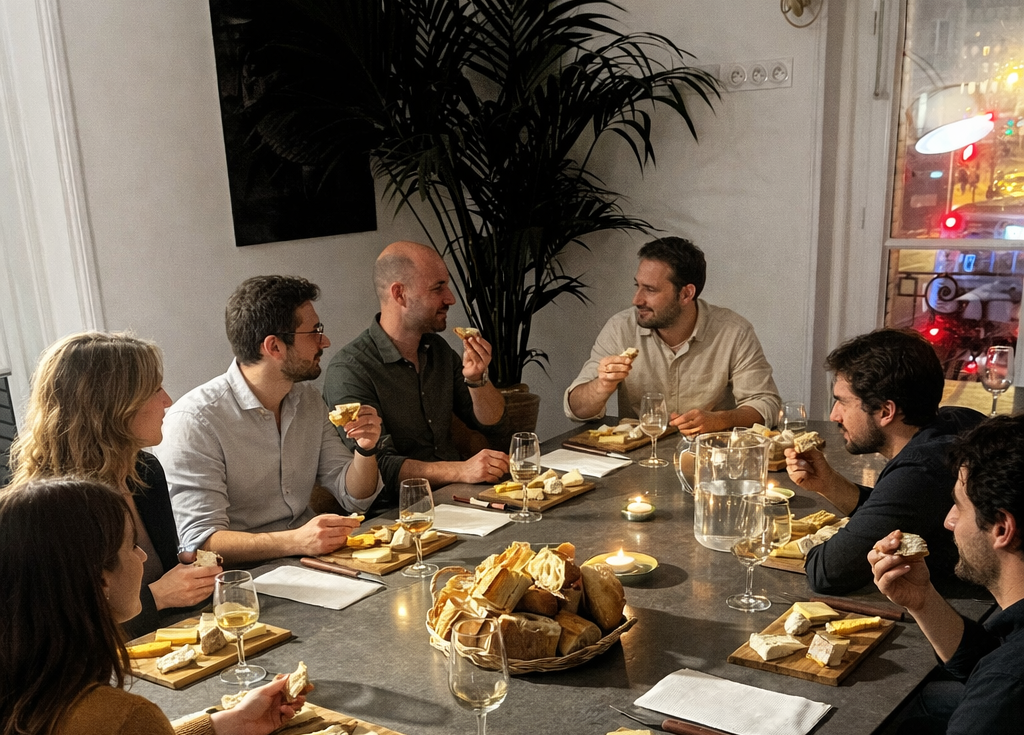
The “Secrets of Cheese” workshop in Paris
Learn, taste, and have fun. Come and discover this introduction to the art of cheese tasting. Learn to put your sensory impressions into words—all in a fun and cheerful atmosphere!
An Androuet exclusive.
Explore our guide to know everything about cheese from A to Z.